
Amazon is cracking down on free shipping. This UVA expert explains what it means

Starting Oct. 1, Amazon Prime members will no longer be able to share free shipping benefits with people living at a different address.

The company announced Wednesday it is eliminating its Prime Invitee Program, which allowed customers to share their free shipping benefits.

“If you shared Prime benefits with others through the Prime Invitee program: You can now share certain Prime benefits through Amazon Family. Your Amazon Family can include an account for one other adult in your household and up to four child profiles,” reads the company’s announcement. “Additional adult members will need their own Prime Membership.”

Translation: If your grown kids living elsewhere want to keep their access to the family Amazon Prime account, either for shopping or streaming Amazon Prime Video, they’ll have to move back home. Otherwise, they’ll need to get their own Amazon Prime accounts.
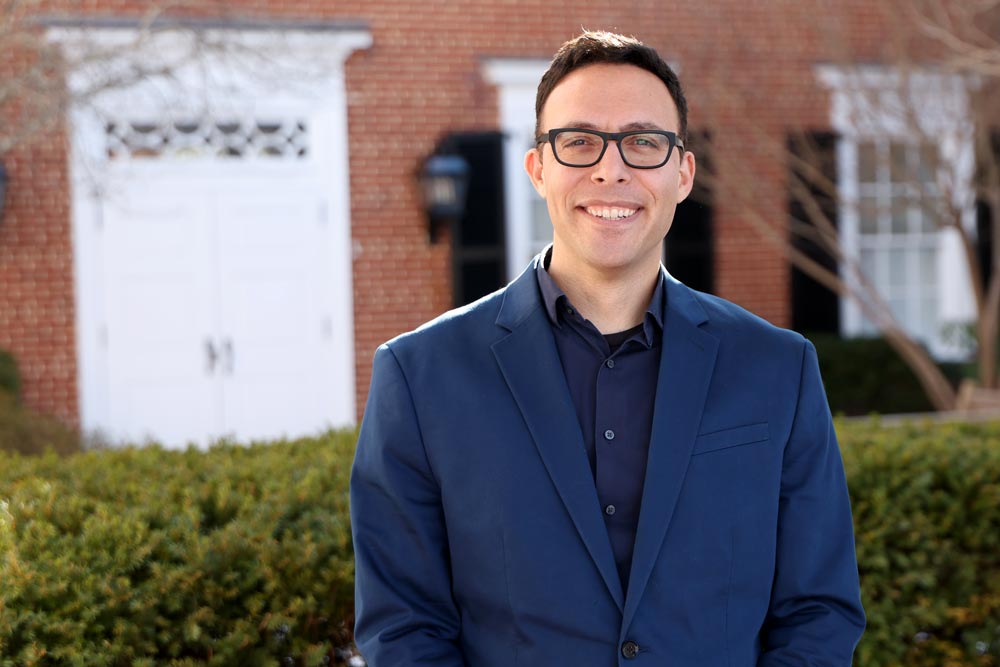
Portrait of Anthony Palomba

Darden School of Business professor Anthony Palomba is a media scholar. (Photo by Matt Riley, University Communications)

University of Virginia assistant professor of business Anthony Palomba is a media scholar who researches how audiences engage with media content and how technology reshapes competition within the media, advertising and gaming industries.

The Darden School of Business professor talked with UVA Today about what changes are coming for Amazon Prime members and the role video will play.

Q. Can you explain what Amazon is doing and how it will impact people?

A. So, as of Oct. 1, those who want to share shipping perks must be living at the same address. There’s been revenue success with this with Netflix and a similar push by HBO Max (to limit benefits to those sharing the same household). This is something that most streaming services are pushing to get behind, particularly those that are popular and have leverage.

Q. Why are they doing this?

A. Frankly, Amazon Prime is popular with many different people and has a cheaper subscription plan, with commercials, that reaches about 130 million people in the United States. Therefore, it’s in Amazon’s best interest to ensure as many people as possible pay for the service.

Discovery and Innovation: NASA selects UVA researcher for asteroid mission

This will also force consumers to potentially cut other streaming services to pay for Amazon Prime Video, as they may want to keep the Prime shipping service. This is a very clever defensive strategy. Moreover, consumers are so reliant on Prime that many of them will fork over the yearly subscription. Therefore, there’s a massive positive spillover benefit for Prime Video. The consumers who don’t pay for Prime, or benefit from a Prime account that isn’t at their residential address, may become more curious about Prime Video since they’re now on the hook to pay for it.

There’s also a case to be made that Amazon wants to focus on paying customers, as average revenue per user may be lower than those who pay for the service.

Q. How does this compare to what Netflix recently did?

A. In May 2023, Netflix enforced that accounts can only be shared within the household based on living at the same address. Now, based on this, Netflix saw significant subscriber growth, a 27% jump from 238 million to over 301 million by the end of 2024, primarily from users previously accessing accounts unofficially.

Amazon Prime Video has poured significant resources into original series such as “Spider-Noir,” “The Runarounds,” “Confidence Queen” and others. Remember, the advertisements that appear during these shows are designed to persuade consumers to buy.

In effect, Amazon has a closed-loop advertising ecosystem waiting to be unleashed.

Now imagine if every viewer had their own account: Amazon could precisely measure individual viewing habits and directly connect what audiences see on screen with what they purchase on the platform. In effect, Amazon has a closed-loop advertising ecosystem waiting to be unleashed. This would dramatically enhance its ad measurement capabilities, expand revenue streams and allow the company to capture the full entertainment experience, ads and shows together, in ways no one has achieved before.

Q. Do you see anything like this coming for consumers? Are other consumer-service corporations or businesses about to make similar moves?

A. Disney also engaged in a password-sharing crackdown. I believe Peacock and Paramount also do this. I think a lot of these firms are interested in shoring up their consumer bases, working hard to understand who watches what, and figure out how to compete against premium quality content and all of the user-generated content that is produced on TikTok, YouTube, Snapchat and elsewhere.

Q. Is there a message that streaming services are sending with these moves?

A. I think streaming services are working hard to remind consumers that, just as they once had to pay for cable and satellite TV, they must do so here as well. Unlike traditional cable bundles, where hundreds of channels could absorb risk and failure, stand-alone streaming platforms are far more exposed to the volatility of the marketplace. There is less room to fail, less room to experiment. Building a model with consistent and reliable free cash flows has become paramount, as each service strives to convince investors it has cracked the streaming business.

Ironically, I believe they now need one another more than ever. A unified bundle and a standardized advertising currency could provide the stability they seek. Much like the airline industry, where carriers compete fiercely but still share the same terminals, streaming services may need to embrace collaboration to survive.

Media Contacts

Jane Kelly

University News Senior Associate Office of University Communications