



On Thursday, Google will attempt to launch a prototype satellite into space to test the feasibility of building AI data centers in the cosmos.
The effort is called Project Suncatcher. Google gave the New York Times an exclusive first look at the effort, “set to become the first step toward that goal by a major tech company,” the outlet wrote.
University of Virginia professor Peter Beling is in the School of Data Science, where he serves as interim associate dean for research, and is an affiliate of UVA’s National Security Data and Policy Institute. He is an AI and systems engineering expert and has talked previously about the AI race to outer space.
Beling talked with UVA Today about Google’s latest venture.
Q. What is Google trying to do with Project Suncatcher?
A. What they’re trying to do is understand the opportunity for putting data centers in space. Given that we can’t deliver electricity as quickly as the demand for AI is growing, there’s an expanding gap. We need more and more energy. There are also other issues people have discussed many times, like potential environmental impacts from water use or from heat on land temperatures.

AI expert Peter Beling is in the School of Data Science. Next semester, he will teach a graduate course on reinforcement learning, used in the final stages of training large language models like ChatGPT and Claude, to make their output more pleasing to human users. (Contributed photo)
Q. How could a data center work in orbit?
A. It’s much more like there’ll be server racks, more or less floating. They won’t be connected by wires; they’re going to be connected by laser communications.
Google is taking its recent generation of AI chips and trying to see whether, in a space environment, they would really be functional. There’s no atmosphere to slow down the particles that are zipping around the solar system, so they’ll be hitting the chips. The question is, will the chips keep functioning in space?
Q. What might one of these data centers look like?
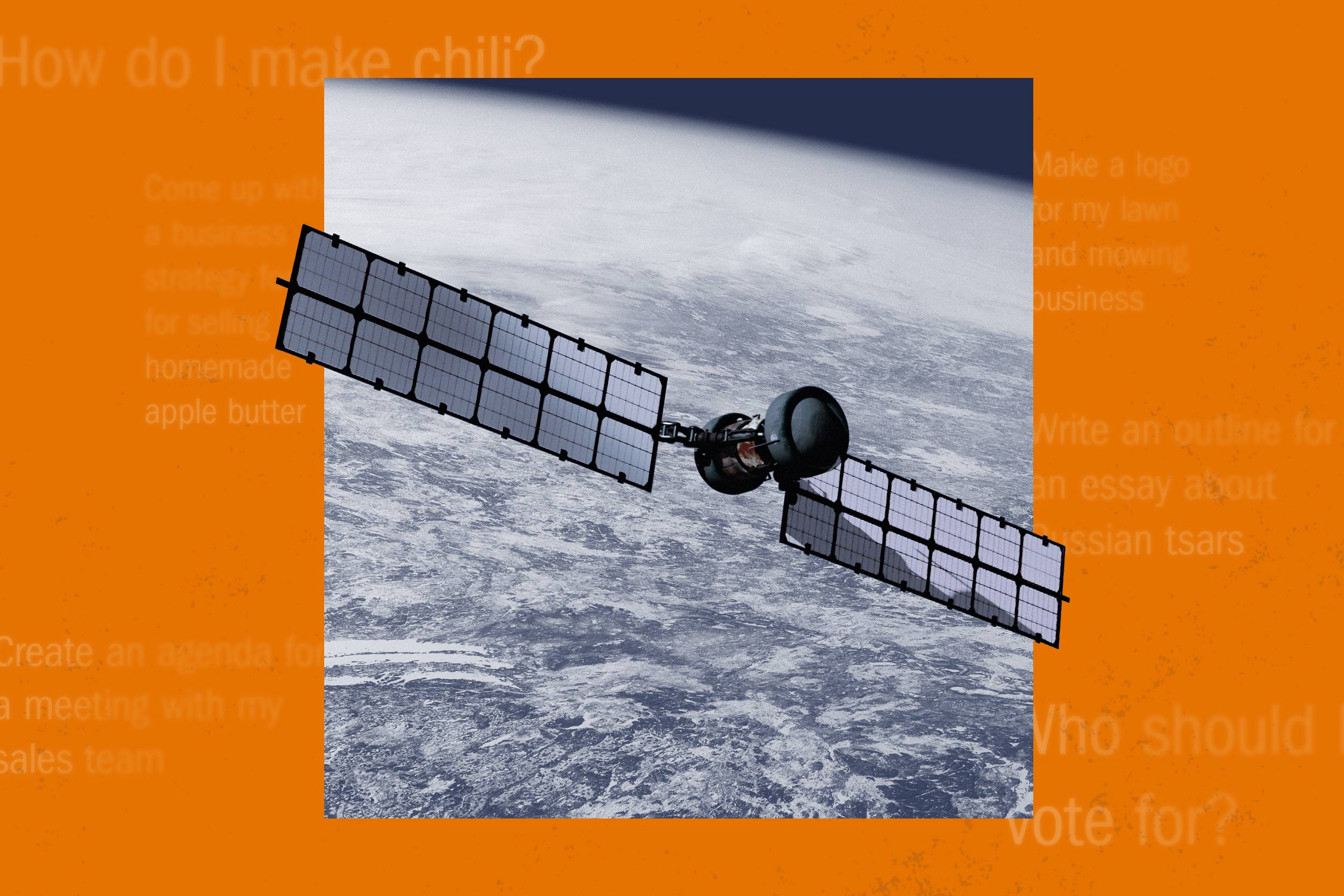
A. The first Google Suncatcher prototype will be about the size of a refrigerator, according to The New York Times. And then the solar panels unfold. Think of it as a box, not too big, surrounded by these big panels.
Q. Why consider space at all?
A. There’s plenty of energy in the form of solar if you can get your satellites in the right orbit. In space, what you have to rely on is radiative cooling. You basically have the infrared radiation coming off of a hot object and just sort of going off into space. That’s how the object cools. So you need a big surface area.