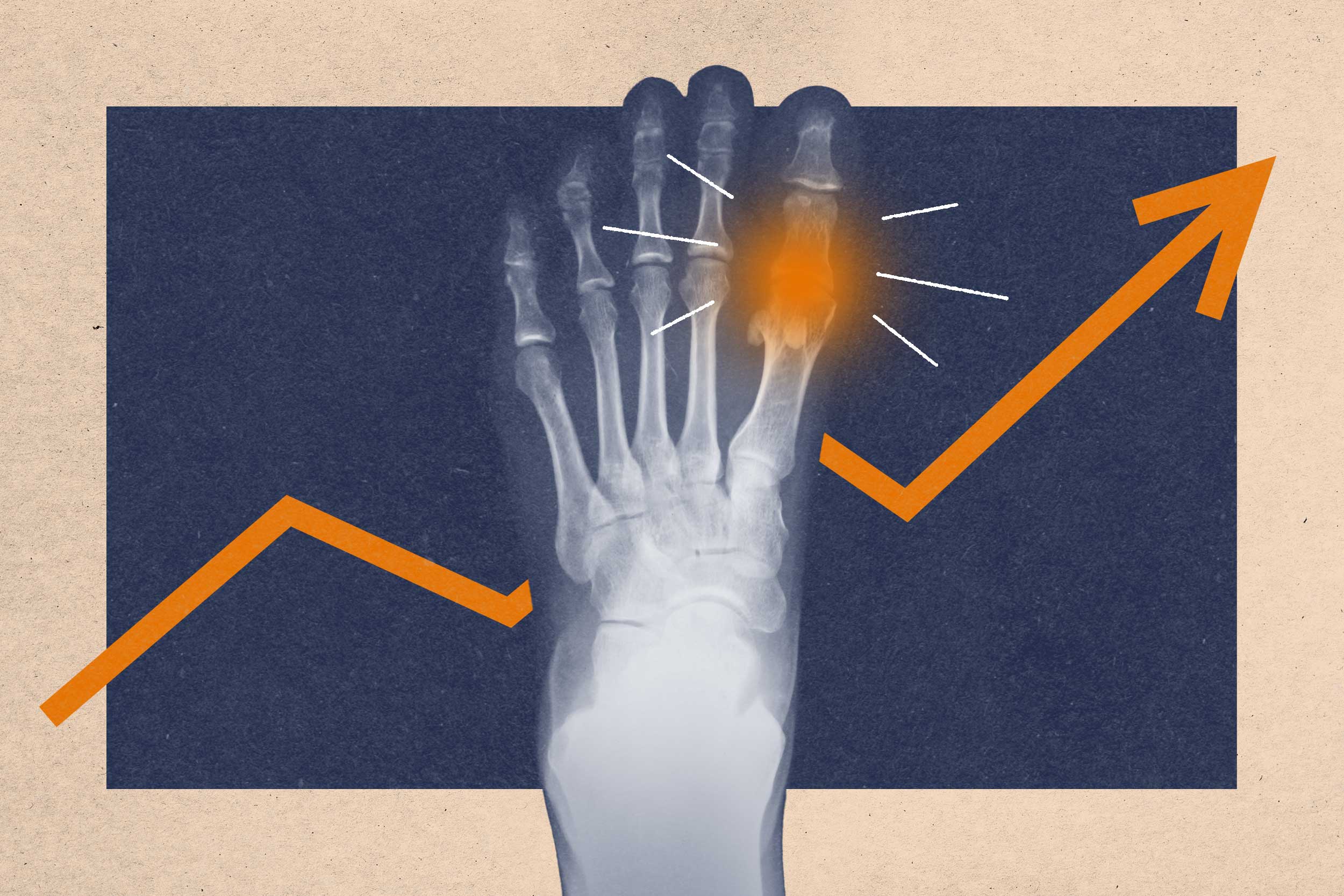




A condition once called the “disease of kings” is affecting even the general population.
Rates of gout, a type of inflammatory arthritis that causes severe, sudden stabbing pain in the big toe, have increased by more than 20% since 1990. Even though it’s becoming a more widespread condition, gout still carries the public perception that has sometimes oversimplified gout as a lifestyle-driven disease.
“Gout is an inflammatory form of arthritis, which is unique because it’s an immune-mediated response to uric acid and sharp uric crystals that build up in and around the joints,” said Malinda Whitlow, an associate professor at the University of Virginia’s School of Nursing.
Gout mainly affects your big toe, but it can also affect other joints and cause acute pain.
“Many people can’t even put shoes on because their big toe hurts so badly,” Whitlow said.
Though the pain can last for weeks, over time, gout can result in joint damage and erosion, permanent joint deformity and decreased mobility due to urate crystal deposits that may develop in joints and soft tissues.

Malinda Whitlow, an associate professor of nursing, is a family nurse practitioner who specializes in internal medicine at UVA Health. (Contributed photo)
Uric acid is the natural byproduct of breaking down purines, which are found in red and organ meat, beer, sugary foods and some vegetables like spinach and asparagus. Gout has historically been associated with dietary excess and alcohol use; however, clinicians now understand it to be a complex metabolic condition influenced by genetics, kidney function, medications, and other health factors and can affect individuals across socioeconomic and lifestyle backgrounds.
In other words, you don’t have to eat a rich diet or drink to excess to develop gout. Whitlow said even people whose levels of uric acid are within a normal range, who complain of sudden big toe pain with no injury or trauma to cause it, can be suspected of having gout.
“You also start to see more gout with age. You start to see it more in people over 60 and in people with certain metabolic conditions, like high blood pressure, obesity, diabetes and chronic kidney disease,” Whitlow, a family nurse practitioner, said.
As the American population ages, we’ll likely see more gout, she said, especially among people with chronic diseases who live longer.
Staying hydrated can help reduce the risk of gout or gout flares. “Particularly as it gets warmer, when we start to complete a patient history, we’re looking at how much water people are drinking, especially if they have a chronic condition that puts them at risk,” Whitlow said.
The medications a patient takes may also increase their risk. For example, diuretics can make it more difficult for the kidneys to excrete uric acid.
Men are more likely than women to be diagnosed with gout. That is partly because clinicians believe estrogen is a protective factor, which would also explain why women become more susceptible to gout after menopause.


