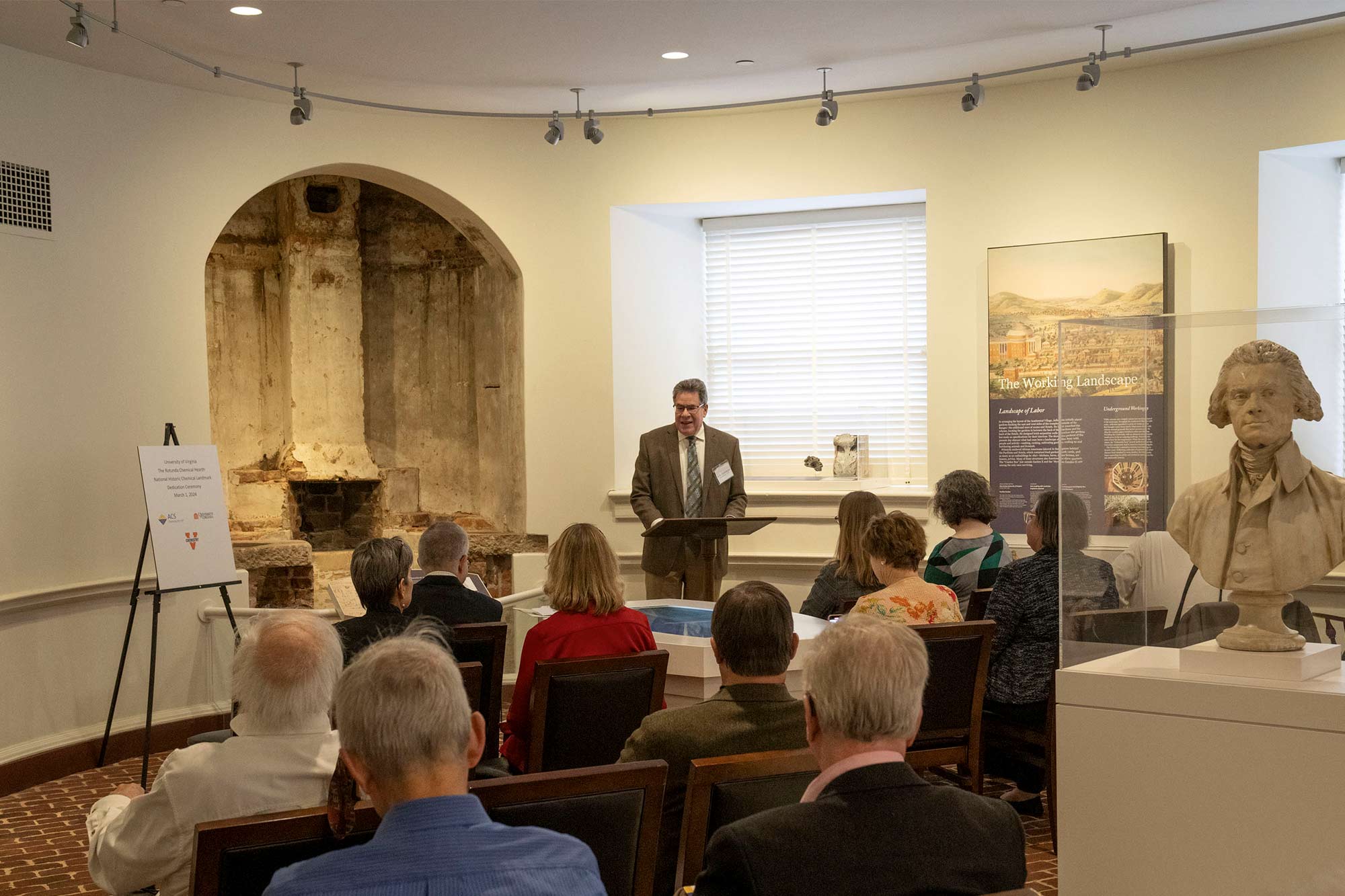
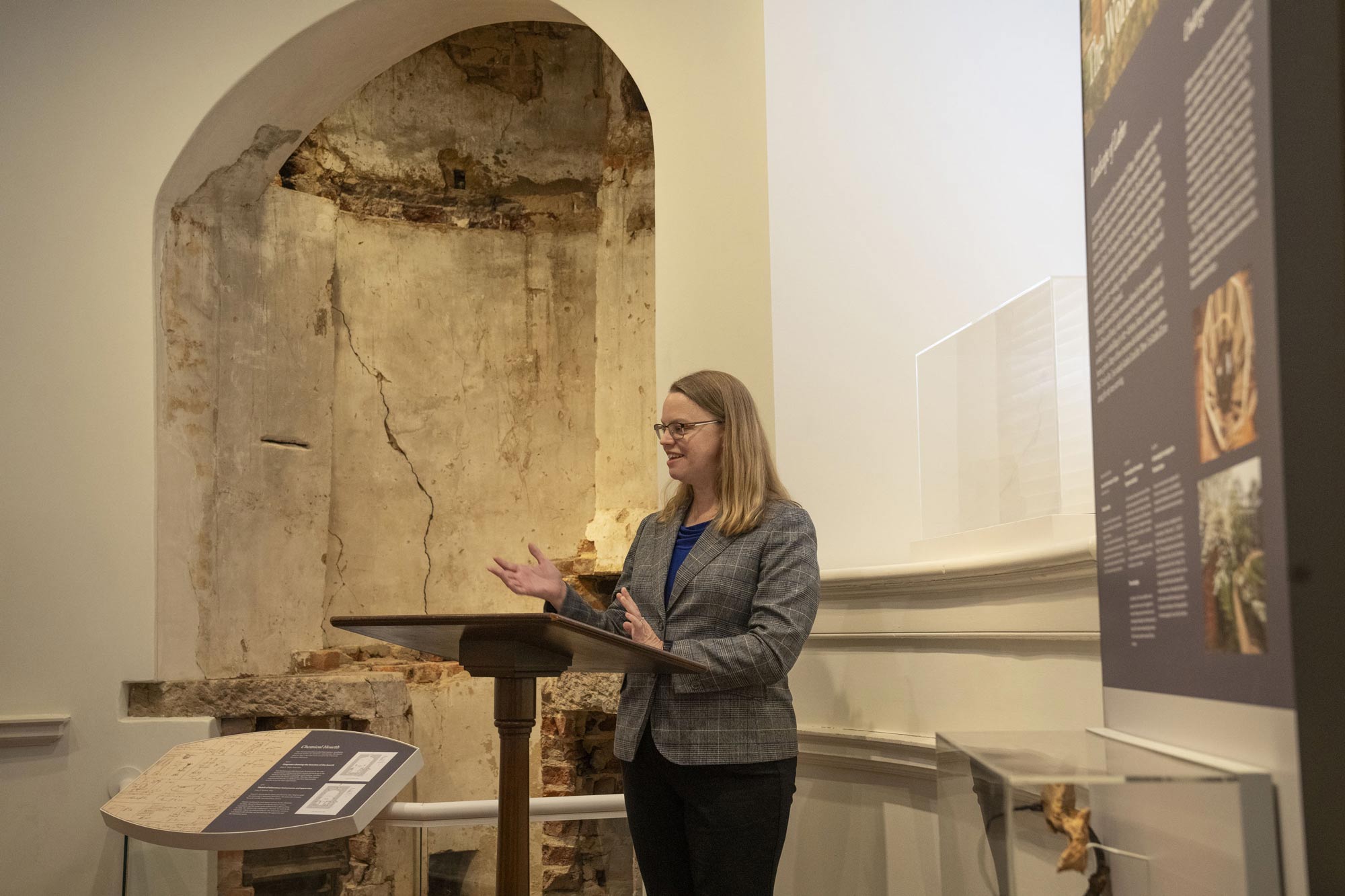
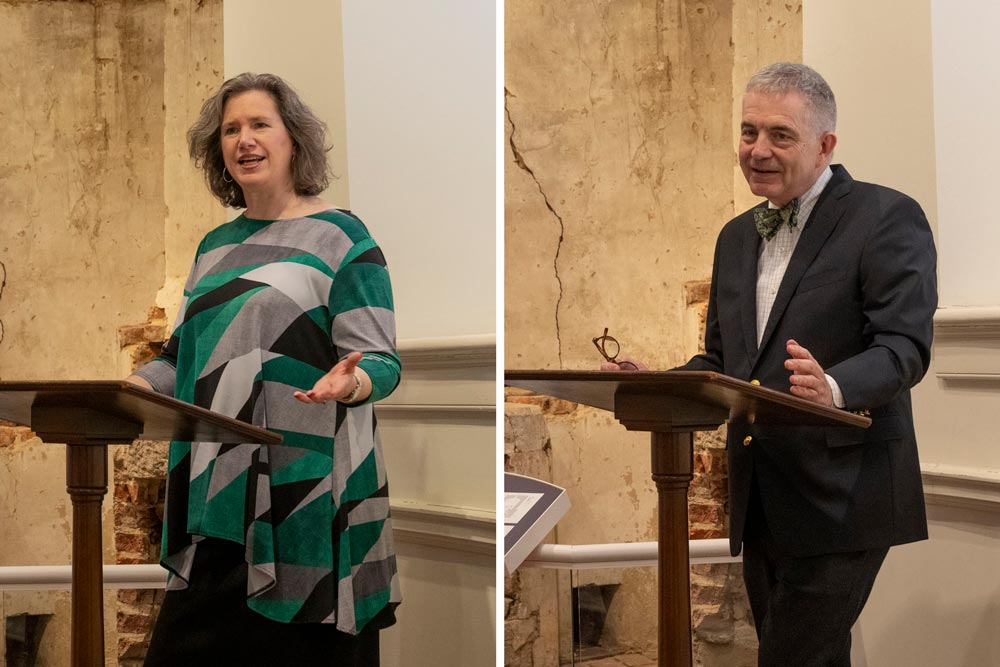
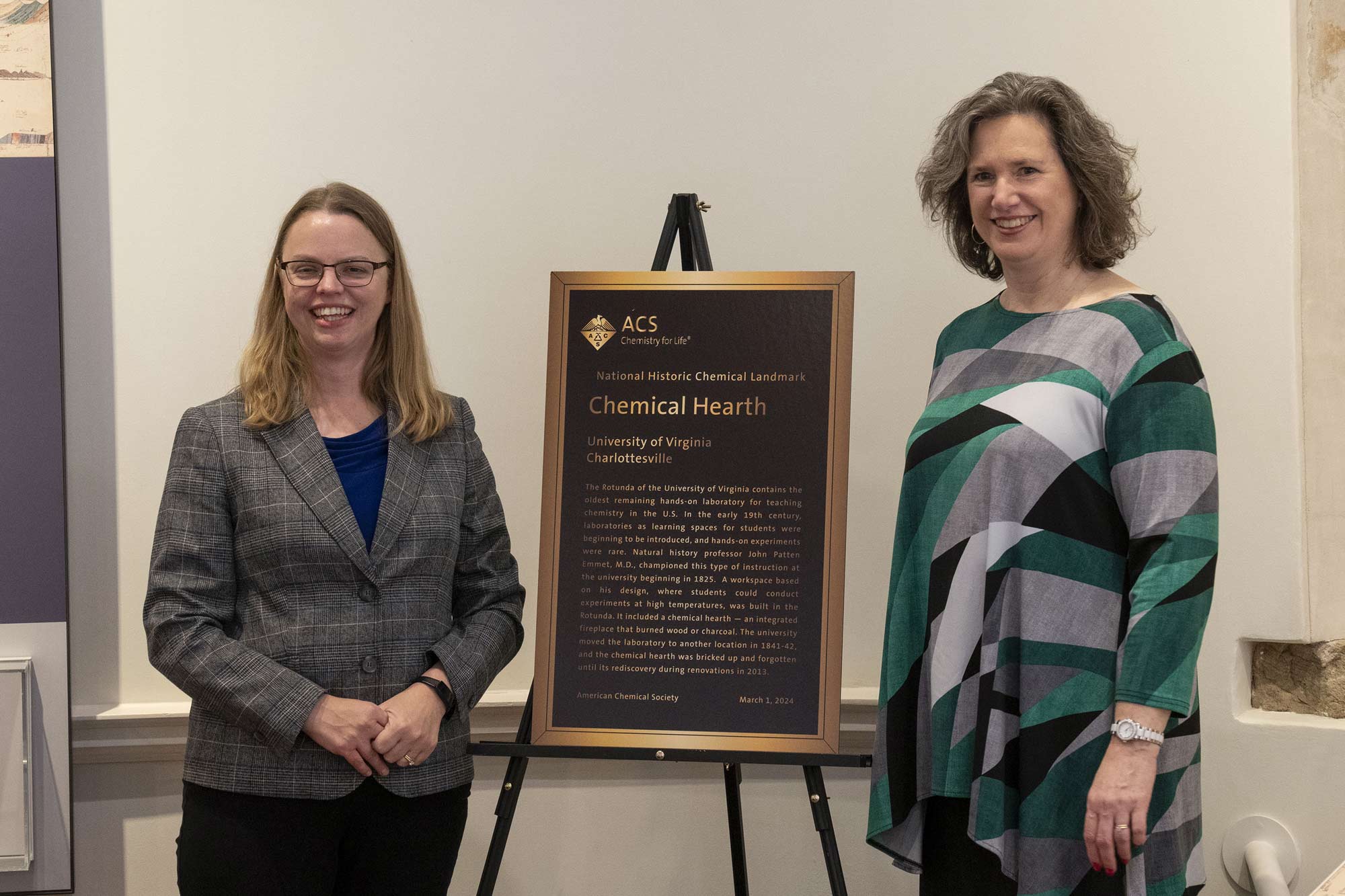
“Chemistry is a subject that can seem intimidating to people. One way to make it more accessible is to share the stories of the chemists responsible for some of the major innovations on which our modern lifestyle is built,” Carroll said. “The methods used to teach chemistry have come a long way since the first U.S. universities were founded. That progress is due, in part, to innovations introduced nearly 200 years ago, here at the University of Virginia.”
Brian Hogg, senior historic preservation planner in the Office of the Architect for the University, said that while other professors taught on the ground floors of their pavilions, Emmet needed a separate space for chemistry because of the noxious fumes.
“Emmet wasn’t teaching theoretical chemistry,” Hogg said. “He was teaching practical chemistry to farmers or plantation owners. That science that he was teaching was intended to be taken by them to improve the production of the farms that they own and to enhance their work.”
Hogg said Emmet also taught medical students how to make medications.
“His classes were very popular. He regularly enrolled about a third of the student body in the various classes he taught, which was important because the faculty were paid in part by the enrollment in their classes,” Hogg said. “Being a popular professor was a good thing.”
Emmet lived in Pavilion I, married the niece of a fellow professor and was the first professor to move off Grounds, to Morea, a house he built nearby. However, he was plagued by poor health.
“Contemporary descriptions of him talk about burn marks all over his clothes from his experiments,” Hogg said. “At one point, a lab assistant spilled sulfuric acid on him and he was out of work for nine weeks. Eventually, his poor health drove him away from the University and he went to Florida in 1841 and ended up in New York at his brother’s house, where he passed away at the age of 48.”
Hogg said the hearth was walled up in the Rotunda in the 1840s when the lab was moved, and that enabled it to survive the 1895 fire that heavily damaged the building. Some of the hearth’s fireboxes were uncovered in the 1975 Rotunda renovation, but the full extent of the surviving hearth was not uncovered until more recent renovations.
He said one of the architects poked his head into the chemical oven, looked up and saw there was more concealed there than previously thought.
“So we made a hole in the wall and there was a void that we hadn’t expected,” Hogg said. “There was a lot of rubble, from the fire in 1895 and from the 1970s renovation, when they also more or less ignored what they found. There were lots of ash and building pieces and Coke cans and things like that. We opened it up slowly and carefully. We removed the things and we found some really interesting artifacts as we went along.”
The hearth was largely intact.
“There are five stations, two on each side and one in the center,” Hogg said of the hearth. “The fireboxes had more vents at the bottom and a pipe apparently connected to a bellows to make the center especially hot. The two slots on each side, we think, were where there were dampers that would help manage the heat.”
“It’s kind of a special object,” Hogg said of the chemical hearth. “It’s small, but it tells a story and it talks about how important the teaching of science was in the early history of the University.”