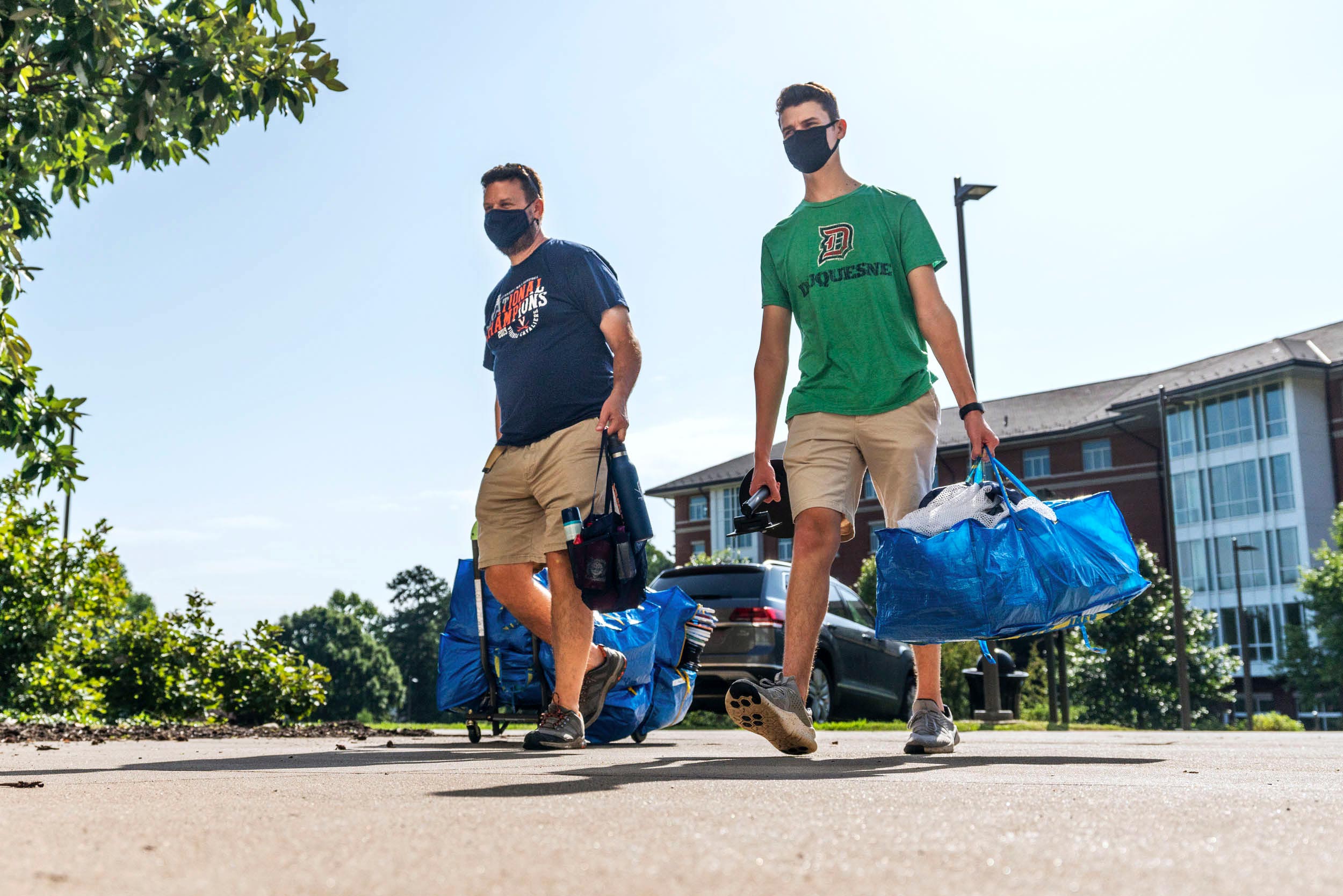




Parents and families of new college-aged students are in major prep mode right now, buying items to outfit dorms and finalizing plans to drop their children off at school.
It’s a natural state of being for parents, who have been in the child care zone for 18 years. From finding the perfect preschool to enrolling their children in soccer leagues and enrichment programs and guiding the college application process, it’s all-hands-on-deck for this new phase of parenthood.
It’s a huge transition for students as well as parents. Tim Davis, a clinical psychologist and an assistant professor of public policy in the University of Virginia’s Frank Batten School of Leadership and Public Policy, is here to help.
Davis is an expert in resiliency and teaches a course called “The Resilient Student: Transition, Thriving and Leadership.” (Parents, there are still plenty of spaces for your student to register.)
He is also helping steward an executive education and lifelong learning program called “BattenX,” and will be leading a session called “Coaching for Excellence: Bringing Out the Best in Others” in Arlington in November.

Clinical psychologist and assistant professor of public policy Tim Davis has been speaking to parents at UVA orientation sessions since 2017. (Photo by Dan Addison, University Communications)
Davis has been speaking to parents at UVA orientation sessions since 2017, offering his expert advice on ways guardians can successfully pivot to the new, college phase their families are facing.
Because orientation sessions are online this summer, UVA Today asked Davis if he could share some of his expertise here. Read on for six of his best tips, in his own words and in no particular order.
Give Your Child Permission to Struggle
The upside and the challenge with UVA families is they tend to be very high-achieving groups of people. Sometimes their students come in and if they feel like they struggle at all, then they feel like they don’t belong at UVA because they’ve seen so much success modeled in their life. It’s really important to say to your student that it’s OK to come up short, to get a bad grade here and there, to not get elected to the office that you wanted.
We know, based on science, that students have to have a prerequisite amount of adversity during their four years in college in order to develop optimal mental health. Without those struggles, without adversity, they will not be able to develop into the high-functioning, resilient young adults that we want them to become. Giving them permission, even supporting them in struggling a bit, normalizing that in the conversation and reminding them that it’s actually critical that they encounter adversity and struggle with it, is important.
That’s when they’re developing new skills, new competencies, new neural networks that will, in my opinion as a clinical psychologist, be the most important thing that they walk down the Lawn with, when they have that cap on: a newly wired brain.
Manage Your Frequency of Contact
Daily contact with your student is too often, and texting counts.
From a developmental standpoint, at this time in students’ lives, their primary job is to individuate and separate from their family. And parents, while very well-intentioned, often kind of short-circuit their child’s ability to do that job by having too much contact.

.jpg)


