



One of Bryan Berger’s favorite things to do as a kid was tag along to his father’s office. His father, an electrical engineer, worked at nuclear power plants in Illinois, Arizona and Alabama.
Berger would watch his dad take apart control valves and then reassemble them. And when his dad busted out blueprints of the power plants, well, that’s when the young Berger really had fun.
“I’d color the nuclear reactor blueprints in with crayons,” Berger said, smiling. “I just found all of it fascinating. I was fascinated by all aspects of science. I was sort of a nerdy science kid.”
Berger, at heart, still is. It’s what led him to study chemical engineering as an undergraduate and for his doctorate. It led him to teaching. Then it led him to start a company that aims to safeguard the public from contaminated food.
It is for those entrepreneurial efforts that Berger, a University of Virginia professor of chemical and biomedical engineering in the School of Engineering and Applied Science, was recently named the UVA Licensing & Ventures Group’s 2025 Edlich-Henderson Innovator of the Year.

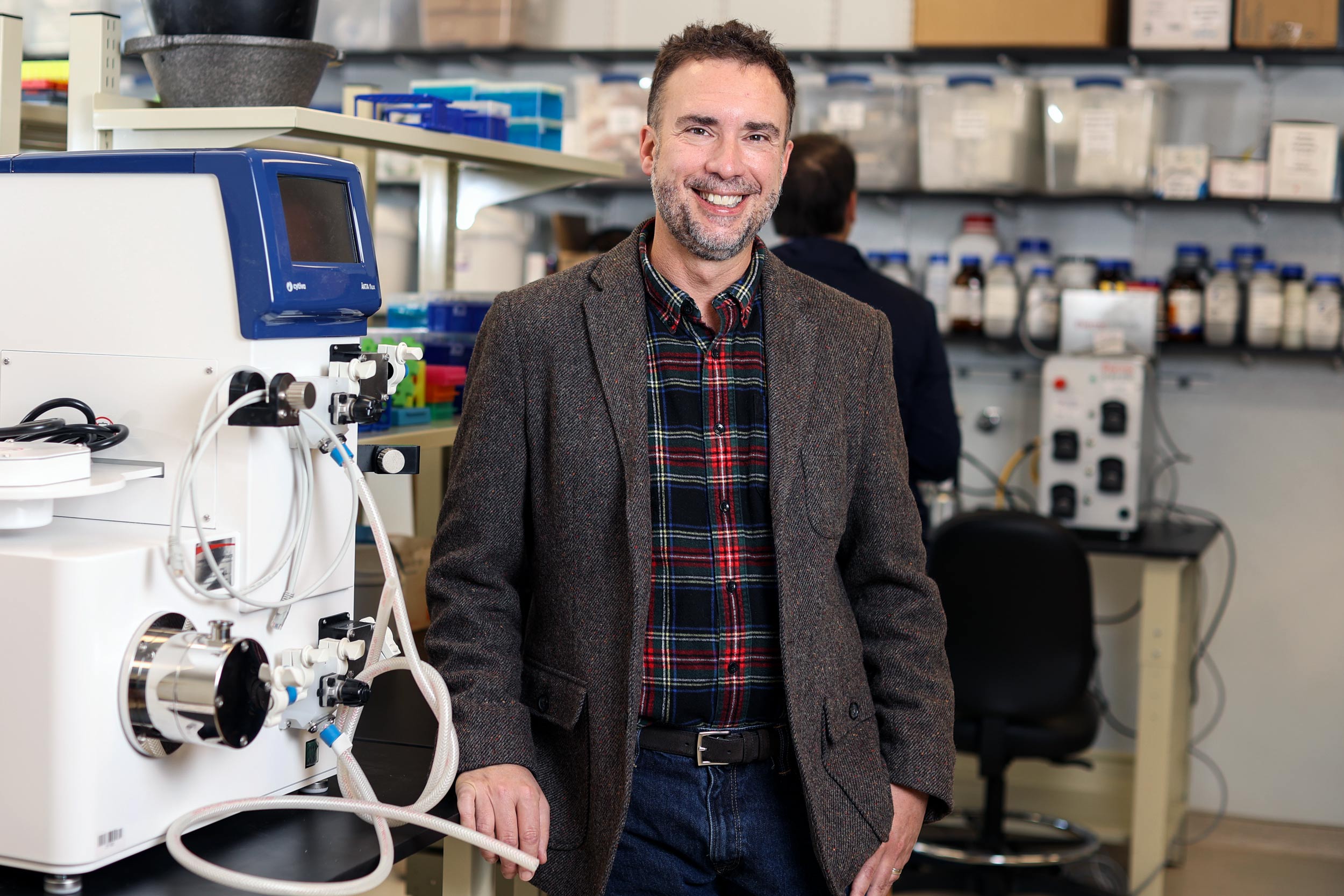
Berger develops protein-based biotechnologies to improve food safety while protecting soil and water. “With a projected 9 billion people to feed by 2050, this is a major challenge,” he said. (Photo by Amanda Maglione)
“I care deeply about protecting our environment, so it is there for future generations to enjoy. This means we have to think about ways of food production that are sustainable and safe,” Berger said. “With a projected 9 billion people to feed by 2050, this is a major challenge, even more so when we look at the cumulative impacts of agrochemical inputs on our food, water and soil.”
Berger’s protein-based biotechnologies form the basis of his startup, Lytos Technologies. Founded in 2018, the company’s goal is to make food safer, creating green, sustainable alternatives that improve the quality and safety of the food we eat while protecting the soil and water that produce it.
In 2019, with the help of the Licensing & Ventures Group – the intellectual property management and innovation commercialization organization for the University’s research portfolio – Lytos licensed Berger’s patented novel biofungicide technology.
Today, that technology, along with other key inventions developed in Berger’s engineering lab, enables the detection and removal of foodborne pathogens, protects animal health and reduces food spoilage.
“Bryan and his company are poised to transform food systems, as we know them, in multiple ways,” Richard W. Chylla, executive director of Licensing & Ventures Group, said. “His vision for the future is inspiring to our entire team.”
Berger’s technologies have attracted interest from companies producing crop protection and animal health products, as well as growers and makers of specialty agricultural goods such as apples, cider and wine.
“Bryan is a shining example of our school’s mission to make the world a better place through engineering for the greater good and our commitment to fostering an entrepreneurial culture,” Engineering School Dean Jennifer West said.


