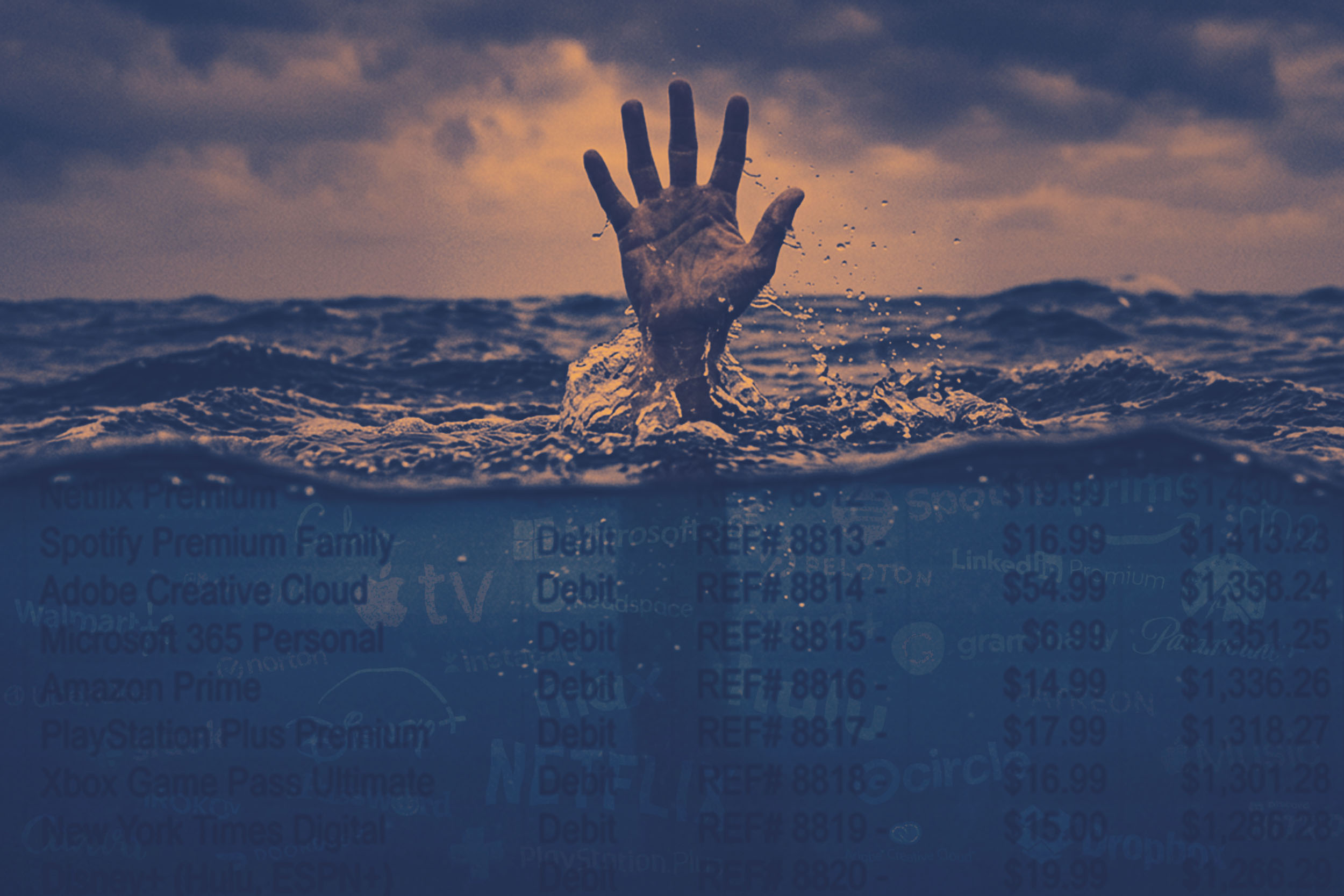




Born of good intentions, they silently sit inside your bank account, chipping at your checking and sipping from your savings, often going unnoticed and unremembered.
They are subscriptions, recurring charges for video game platforms, music, television streaming services, wine clubs, soft drinks at restaurants and even smart beds that monitor your sleep habits.
They’re even in your garage. Tesla charges monthly for its self-driving software, Mercedes-Benz offers subscriptions to unlock more horsepower, and BMW once floated the idea of monthly subscriptions for heated seats.
Even Bank of America, the nation’s second-largest bank, recommends businesses consider subscriptions.
UVA Today reached out to Anthony Palomba, assistant professor of business with the University of Virginia’s Darden School of Business, to learn why subscriptions are proliferating and why people often forget they’re even paying for them.

Anthony Palomba, an assistant professor of business with the Darden School, says subscriptions give companies insight into consumer behavior they wouldn’t get from traditional retail methods. (Photo by Matt Riley, University Communications)
Q. There are subscriptions for almost everything, including frozen fish from Alaska. Why are so many companies and services offering subscriptions?
A. Subscription services, from the perspective of firms, are a powerful mechanism for smoothing revenue curves, creating structural lock-in, exploiting sunk cost psychology (the consumer reasoning of “I have already paid for this, I might as well keep engaging to extract value”) and enabling robust data collection.
Firms can now track entire consumer journeys that were previously untraceable, opening the door to stronger predictive models and, under the right research designs, more credible causal inference about customer behavior.
Q. What sort of data can a company collect from a subscription that it wouldn’t get otherwise?
A. Consider a wine subscription service: The firm can observe how consumers browse and select wines, how frequently they consume them and how those patterns shift across seasons, holidays and broader cultural moments. That behavioral richness simply does not exist in the traditional retail model, where a consumer walks into a wine shop, makes a purchase, and the transaction ends.
The firm learns almost nothing about downstream behavior unless the consumer volunteers it – an unlikely and unsystematic source of insight at best. In this way, the subscription model binds together disparate parts of the value chain that were once fragmented and opaque, transforming a series of isolated transactions (distributor, store, consumer) into a continuous, observable relationship between firm and consumer.


