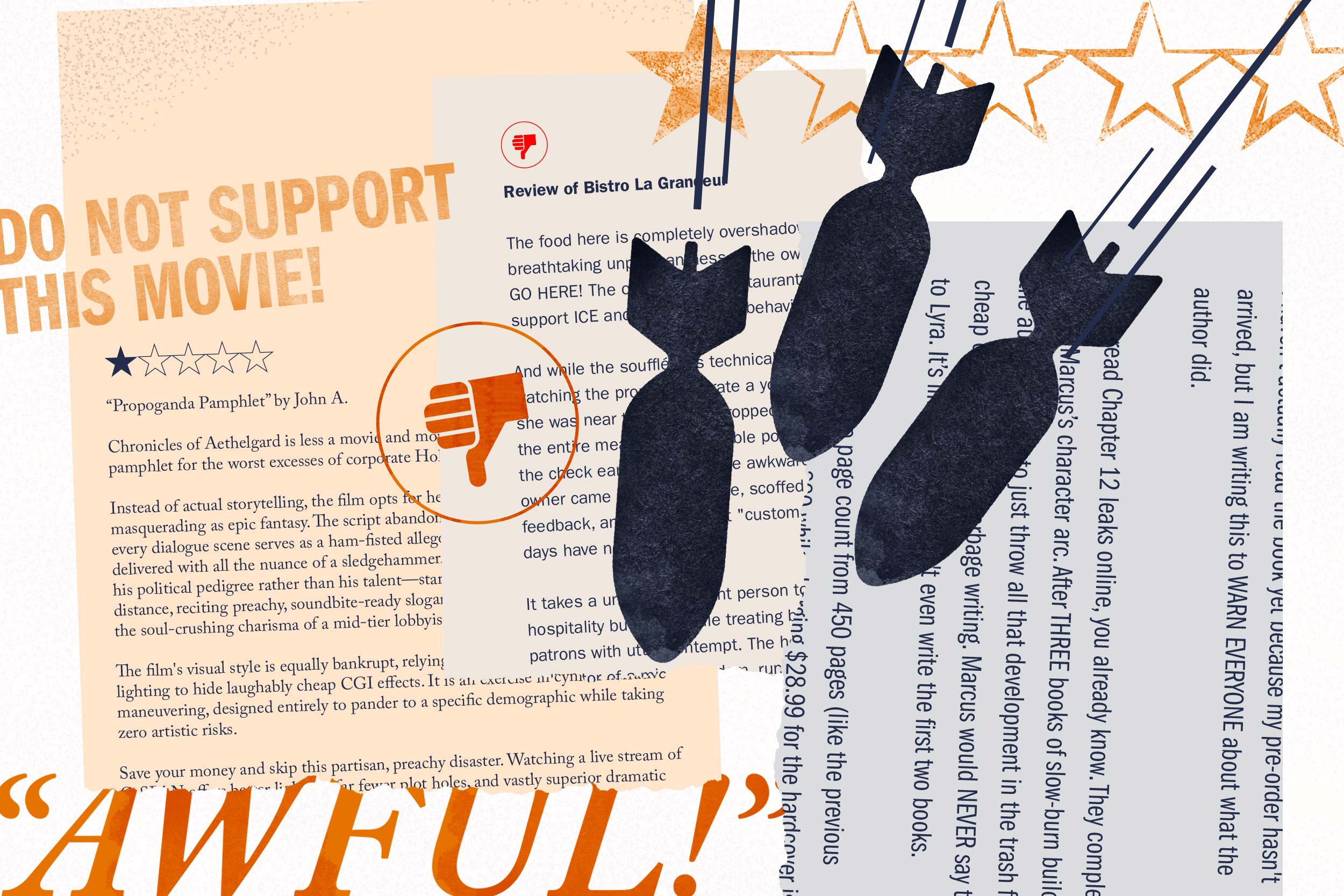




Before buying a product, booking a hotel or streaming a movie, many people check online reviews. But not every glowing recommendation or one-star takedown reflects a genuine customer experience.
David Schuff, a professor at the University of Virginia’s McIntire School of Commerce, studies how online review platforms shape consumer behavior. In a July commentary in Nature Human Behaviour, co-written with Susan Mudambi, professor emeritus of marketing at Temple University, they examine the rise of “review bombing” and its effects on consumers and online platforms.

UVA commerce professor David Schuff studies how online reviews influence consumer behavior and what happens when people manipulate them. (Contributed photo)
Schuff explains why the practice has become more common, how it can undermine trust in reviews and what consumers should watch for before making a purchase.
Q. What spurred your interest in researching online reviews?
A. Initially, the ubiquity of online reviews and the power of consumers to drive product perceptions is what made this an interesting area to study. Consumer-generated reviews are such an integral part of our daily lives. Understanding their influence explains a lot about how consumers make decisions about what product to buy, what movie to see or what restaurant to visit.
But then we started noticing people were using these review platforms in unexpected ways that were not really about assessing product quality at all. We call this “review platform appropriation.” It seems like a subset of people use these platforms in a very performative way. We were curious about the impact of funny, absurdist reviews about a shirt or a pen, or a burst of scathing reviews of a movie with little or no details about it beyond perceived politics behind the casting choices.
Q. Are there certain products or industries that are especially vulnerable to review bombing?
A. Entertainment products like movies, television shows or video games are frequent targets of review bombing. They often are part of franchises with a large, devoted fanbase, and some fans react strongly when their expectations are subverted.
Q. How much influence do review bombs have on consumer behavior?
A. For movies and television shows, this is an open question. “The Odyssey” has been very successful despite being review bombed. It’s a similar story for movies like “Star Wars: The Last Jedi” or TV shows like “Marvel’s She-Hulk.” They performed well despite being review bombed. In those cases, other loyal fans may be simply ignoring the negative reviews.
Review bombing video games has had more impact. Sony dropped its requirement that players create a PlayStation Network account to play Helldivers 2 after a coordinated campaign of negative reviews. The reviews were about the policy, not the game itself.
However, the real effects of review bombing may be on the review platforms themselves, potentially reducing trust in them as a reliable source of information. This is why they try to police their own content.
Q. What have been the most extreme examples of misinformation or political or social statements you’ve come across?
A. “The Odyssey” is currently being review bombed, although it hasn’t stopped the movie from being successful. This example from a Metacritic user review is typical of review bombing. There is a long list of generic movie components (direction, editing, etc.) without any specific details, ending with a political or social statement: “A terrible adaptation of one of the greatest works of human literature, with immense problems in terms of direction, editing, cinematography, casting and acting quality. It distorts the core and purpose of the work to prioritize woke political agendas that, for many years now, have been extremely harmful to the world in general and cinema in particular. Definitely one to avoid!”


