
Q&A: What did this student find while digging in Icelandic soil?

This summer, Rosie Latham has spent her summer digging in the Icelandic dirt, uncovering the lives of people who lived more than a thousand years ago. 

A rising fourth-year archaeology student at the University of Virginia, Latham has been part of a historic excavation of a Viking Age burial in northern Iceland. 

From a hotel bar in Reykjavík, Latham spoke with UVA Today about what she found and what she’s looking forward to in her final year. 

Q. What have you been up to this summer? 

A. I was up in Skagafjörður in northern Iceland working on this farm called Reynistaður, which is one of the oldest occupied farms in the region.

Celebrating Our Shared History - VA250

In the Vinland Sagas, which is where Vikings go to the “New World,” one of the main characters is Gudrid Thorbjarnsdóttir, one of the most famous female explorers. According to the Saga of Erik the Red, she ended up settling at Reynistaður after all her adventures in the “New World” and Greenland. 

This field school had two units going on. One was a midden (medieval trash pile), where they found a lot of lamb bones, which means the people who lived there were rich. They also found fabric, a knife, a shoe and other artifacts.

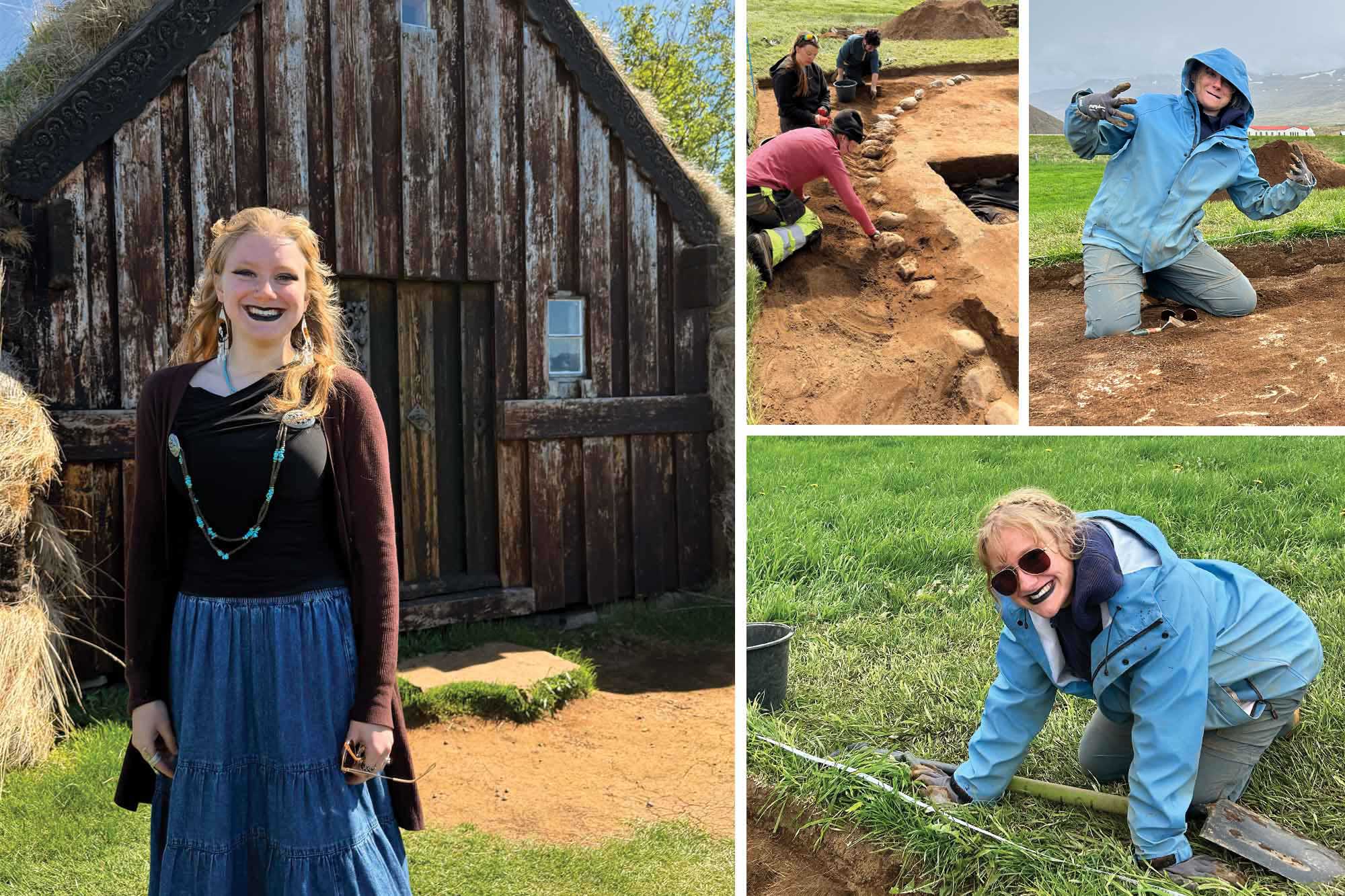
I ended up on a crew of three people looking at this burial way, way down in the “Landnám” (“land taking”) settlement era of Iceland. As we were examining the site layer by layer, recording everything, we first found a vertebra and a bunch of random small bones under a medieval wall hugging the burial mound. It’s very odd and means that someone – a grave robber most likely – went in there and desecrated the bones centuries after they were buried. 

Collage showing Latham posing and taking part in an archaeological dig.

Latham is the president of a newly launched medieval club at UVA, debuting in the fall semester. (Contributed photos)

When we finally got to the actual burial, there was a large stone shoved in the mouth, which is sinister and symbolic. This was a shocking and extremely exciting discovery. One of the leading theories is that people usually do that when they don’t want someone to come back from the dead and haunt them. Now, the bones are going to the National Museum of Iceland, where they’ll figure out what’s going on. 

Q. What have you been working on at UVA?

A. I’ve been focusing on the Vikings and northern Europe. I’m now going to be pursuing the distinguished majors program in the medieval studies department, which is new. UVA’s department is actually one of the biggest in North America, which is a little-known fact. 

It’s an incredible department. You can basically choose any part of the medieval world, and there is a professor there who at least knows something about it. 

For my program, I’m going to be pursuing something about Irish women, but I don’t know exactly what my topic is going to be yet. 

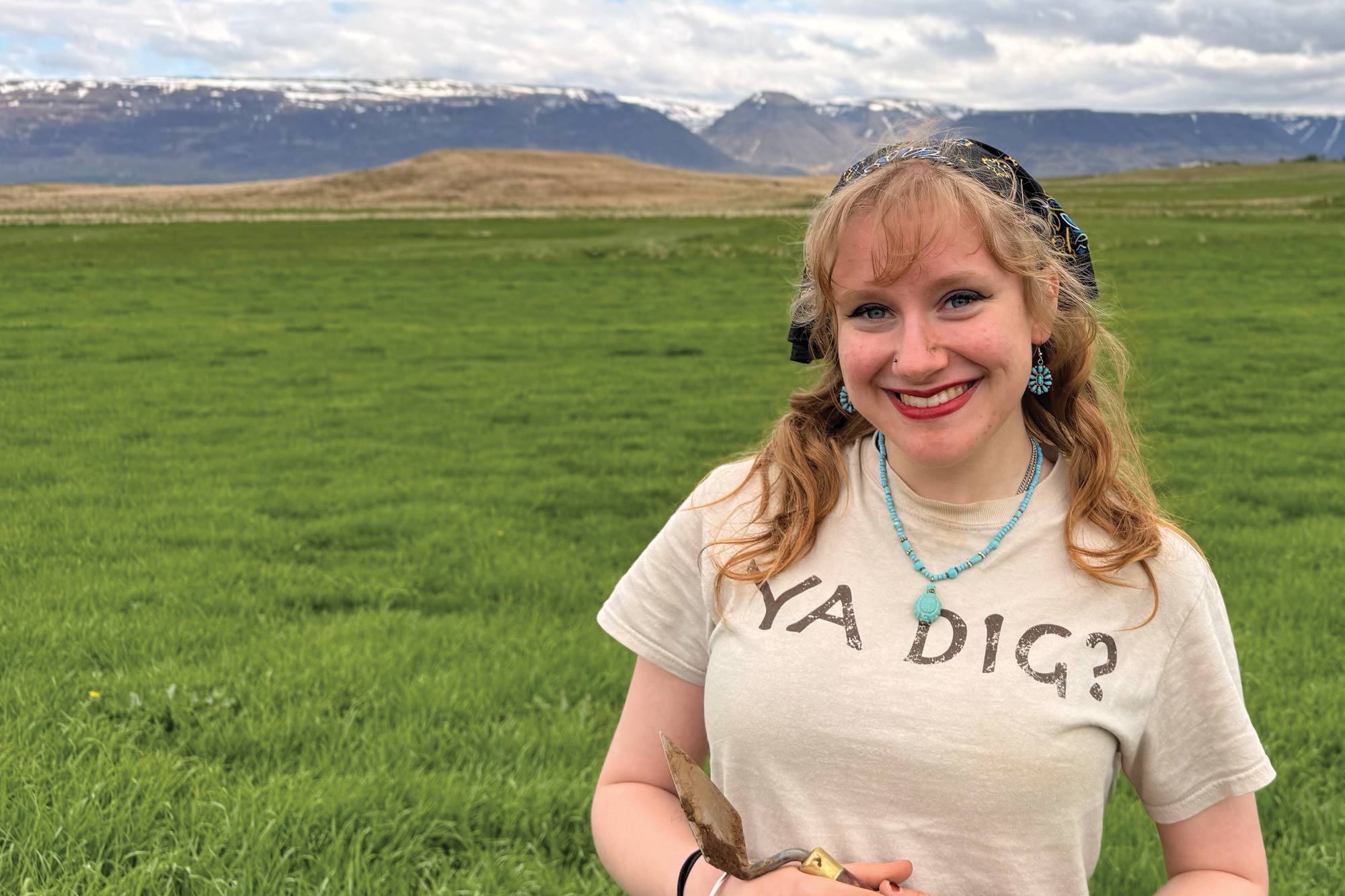
Latham holding a trowel in a green field with mountains in the background.

Latham says the UVA medieval club will host activities like movie nights and guest lectures. (Contributed photo)

I just got my work submitted to UVA’s medieval journal, Quill and Quire. The title of my paper is “Remember as long as you live … that a woman has struck you: Feminine Rage and Revenge in the Viking World.” It focuses on how Norse women expressed anger and revenge, looking at both real-life examples and historical sagas. 

Q. What inspires your work?

A. My work as an archeologist has shown me that so much gets lost over time, and that really concerns me. I want to preserve as much as possible. When my uncle Ned, who was one of my best friends, passed away, I realized that if I didn’t write down the stories he told me, they would be lost forever. It’s given me a sense of duty to preserve stories. 

Q. What do you have planned for your final year at UVA?

A. I have an oral history passion project called the Lore Project, and I’m hoping to get more into that. I’ve collected a lot of different anecdotes and stories of tough things that people have been through. Sometimes people submit advice for others going through the same thing.

I have started my own organization called You’re Not Alone, which provides support for sexual assault survivors. Next semester we will be working with Take Back the Night to provide even more support and community for survivors. I want to be someone who can be there for people, because I didn’t always have someone who was nonjudgmental to listen to me. In general, if anyone wants to contact me for peer support or questions about archeology, I’ll be in Lawn Room 39 and I would love to talk to anyone!

Media Contacts

Zeina Mohammed

University News Associate University Communications