Do you believe in flying saucers? Mind reading? The ability to move objects without touching them? Should you believe in anything without proof?
And will thinking about things outside your normal experience then help you redefine what you understand about more “normal” things?
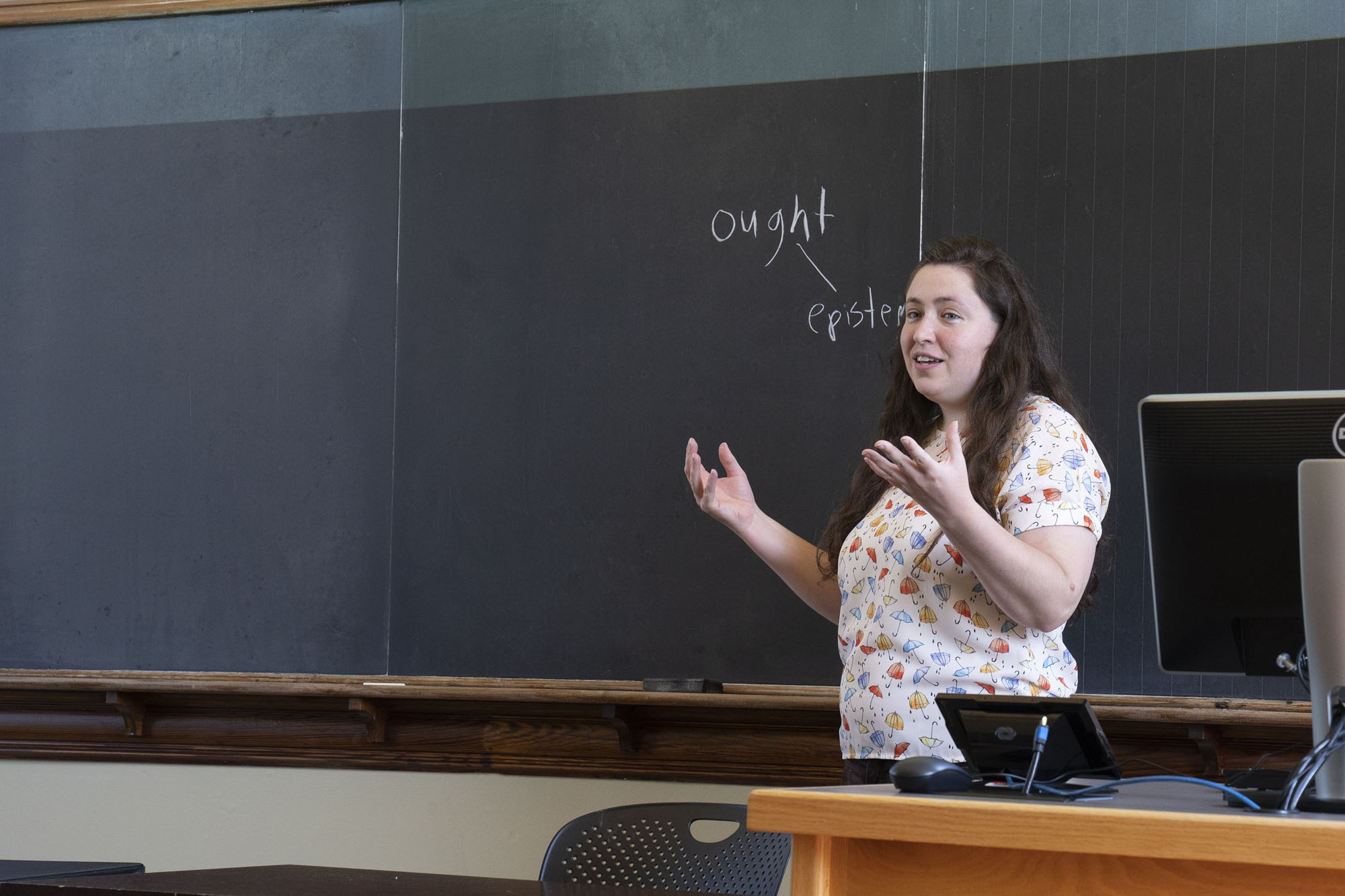
This is part of the lesson that philosophy graduate student Kirra Hyde is trying to get across in her “How to Think about Weird Things” course, being offered in the first summer session.
Hyde, who is a year away from completing her doctorate, said her course material covers a lot of bigger questions, such as “What justifies beliefs?” and “What is knowledge?”
“But in this class, we are trying to apply them to what I call ‘weird things,’ which can be stuff like extrasensory perception, unidentified flying objects, telepathy – things that you might call paranormal,” Hyde said.
William Kingdon Clifford, a 19th-century English mathematician and philosopher, would have none of that, she pointed out to her class. Clifford advocated for evidence to believe something.