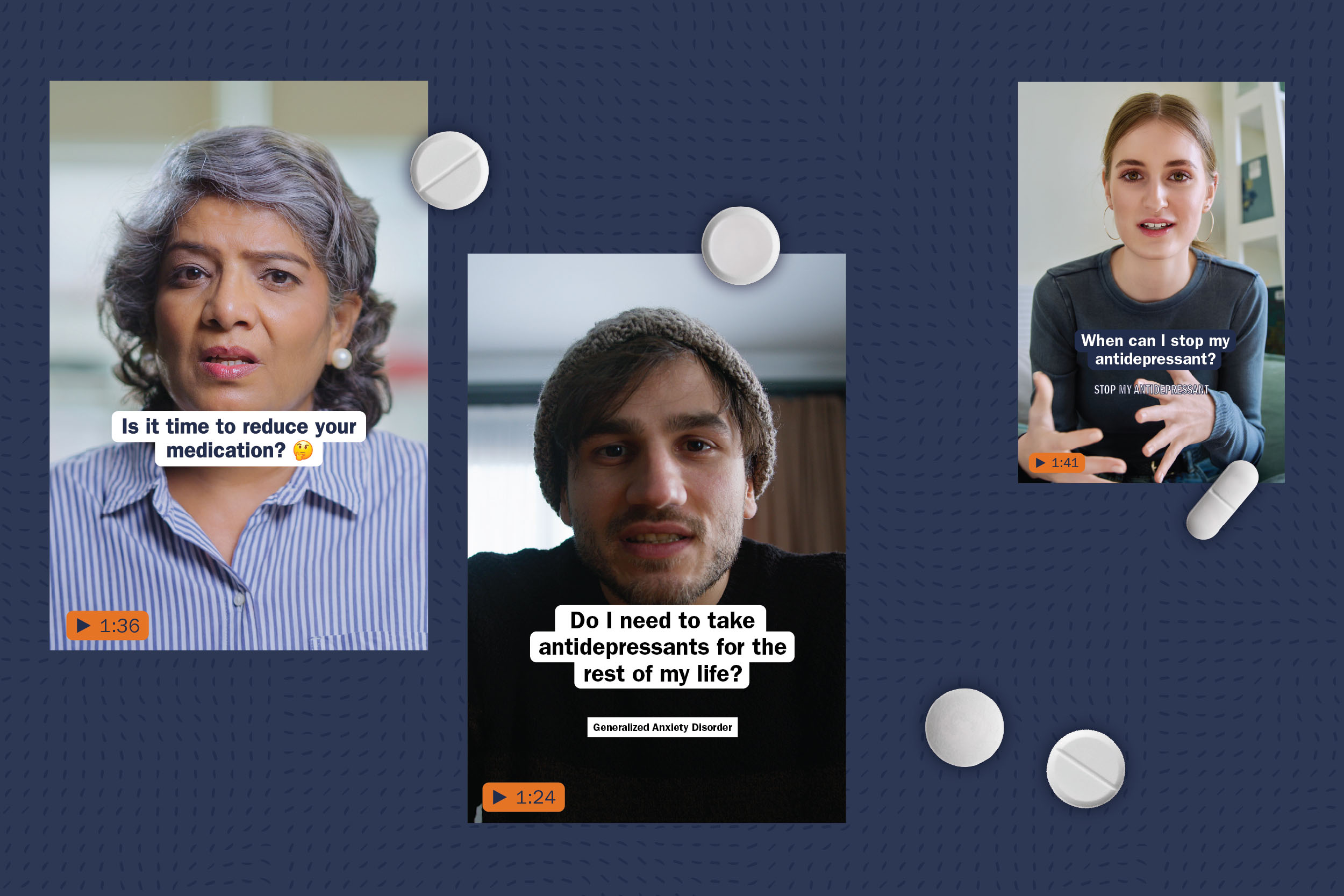

When is it safe to stop taking antidepressants?

According to a 50-state survey, roughly 16% of American adults currently take antidepressant drugs – and some of them want to stop.

On Reddit, users seek advice from each other about how to discontinue taking their antidepressants. On TikTok, users make videos about their experiences stopping medications and offer advice on how to handle withdrawal symptoms. Some people complain their doctors never talked to them about stopping treatment.

U.S. Secretary of Health and Human Services Robert F. Kennedy Jr. has announced a set of policies to encourage doctors to deprescribe selective serotonin reuptake inhibitors, or SSRIs, the most widely prescribed class of antidepressants.

“The reality is these medications are very safe,” said Dr. Anita Clayton, a psychiatrist at UVA Health. Clayton recently cowrote, along with 44 other psychiatrists and researchers, national recommendations for deprescribing psychotropic medications through the American Society of Clinical Psychopharmacology.

Celebrating Our Shared History - VA250

Clayton emphasized people should never discontinue their medication without speaking to their prescriber first. Stopping abruptly or without medical guidance can lead to relapses, flu-like symptoms and sleep disruptions. A healthcare provider can help someone “taper,” or slowly lower their dosage over time, reducing side effects. Still, the new recommendations advise psychiatrists to assess the efficacy and relevance of patients’ treatment plans.

Feeling “numbed out,” sleeping too much or too little, and experiencing sexual dysfunction can occur while taking antidepressants, and Clayton said prescribers should take those symptoms seriously. But when is it appropriate for someone to consider coming off their medication?

It may depend on your diagnosis, Clayton said.

Portrait of Dr. Anita Clayton

Dr. Anita Clayton is a UVA Health psychiatrist and coauthor of national guidelines for deprescribing psychotropic medicine. (UVA Health photo)

“If you’ve been diagnosed with schizophrenia or bipolar depression, once you are treated appropriately, you should never discontinue your medication, because if you do, you may not respond well to treatment in the future,” Clayton, also the president of the American Society of Clinical Psychopharmacologists, said. “You may also see a decline in your overall cognition and function.”

Clayton said the picture is more complicated for patients with a diagnosis of major depressive disorder. Experts generally agree that after an initial depressive episode, a person has about a 50-50 chance of experiencing a second episode. A second depressive episode leads to a 70% chance of a third episode; after three, it’s 90%. In that case, a medical provider would likely recommend a patient stay on medication indefinitely.

“In general, people who have had one episode that has been effectively treated for nine months to a year, they can consider discontinuing their medication,” Clayton said. “For a second episode, give it three to five years.”

People with additional diagnoses, like generalized anxiety disorder, should be more careful about stopping their antidepressants.

Doctors might also wean someone off a medication if the treatment is redundant.

“Sometimes a doctor will prescribe two SSRIs, and that makes no sense from a mechanistic perspective,” Clayton said. “Those medications work the same way, so we’ll deprescribe one of them.”

One reason that happens, she said, is that SSRIs are safe. Some may not be recommended for certain segments of the population – paroxetine, for example, can cause cardiac defects in pregnant women – but most side effects are not life-threatening.

“They’re familiar with them, they’re safe, and they come in generic forms, so insurance will cover it,” Clayton explained.

Depending on a patient’s diagnosis, a psychiatrist can treat a patient with multiple medications that have different mechanisms of action. Clayton added new treatments for mental illnesses like depression are always under development. 

Any treatment plan, she said, should be paired with psychotherapy for the best chance of helping someone into remission from their mental health disorder.

“Therapy alone could be effective if you have a mild major depressive episode,” Clayton said. “Psychotherapy changes your brain in a different way than medications do, and that’s additive.”

Not every antidepressant works for everyone, and not everybody needs to take one indefinitely. But the larger problem, according to Clayton, is access to care.

“Many people have major depression, and it doesn’t get diagnosed, they don’t get treated, or they don’t get treated to remission,” she said.

Media Contacts

Eric Swensen

UVA Health System