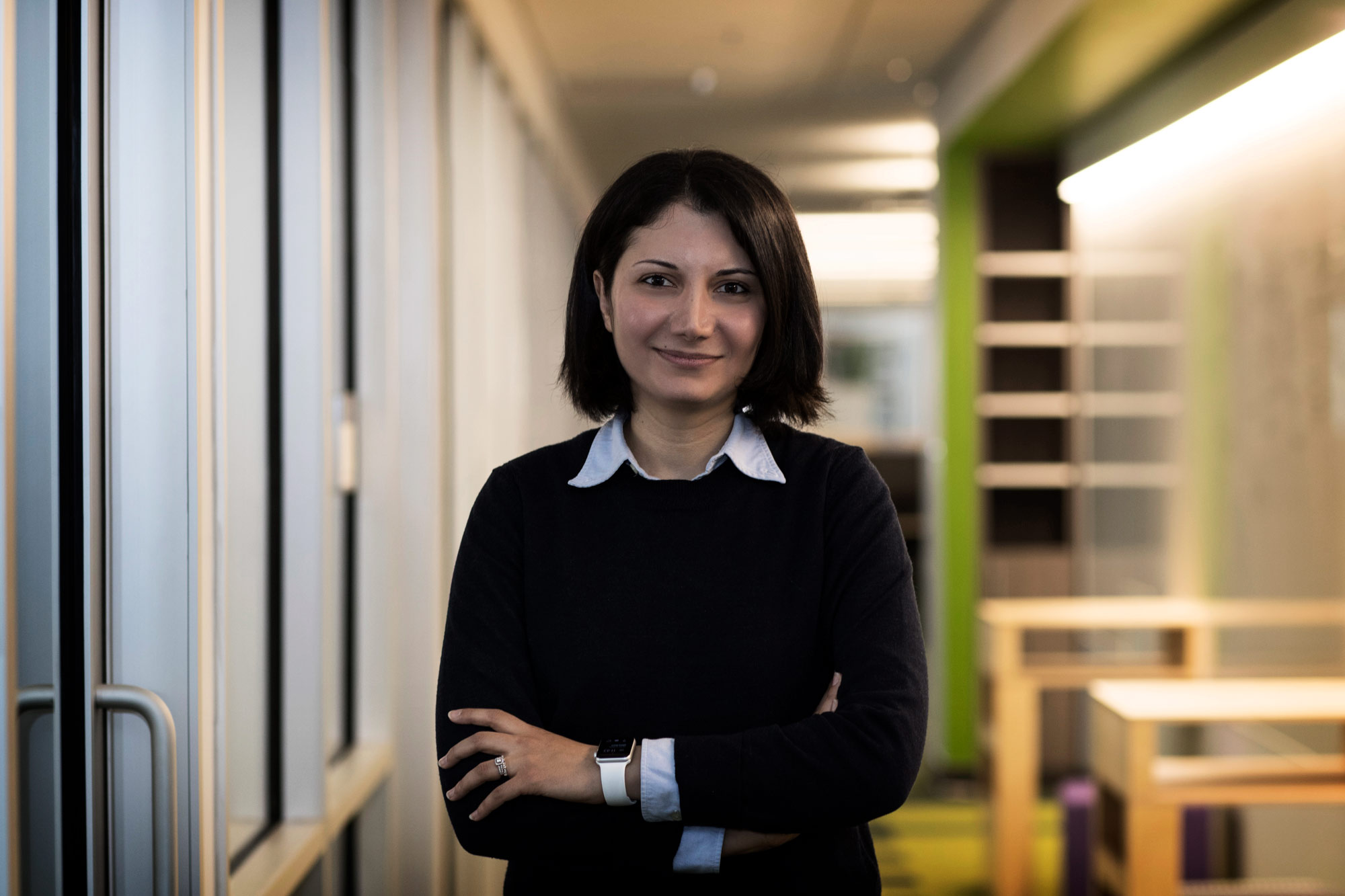
A University of Virginia engineering professor imagines a day when people living in small towns far from big hospitals can get life-saving operations performed, in part, by a robot surgeon that does the cutting and stitching.
And the National Science Foundation thinks Homa Alemzadeh might be on to something, so it is giving her $550,000 over five years to innovate robotic surgery.
Alemzadeh is an assistant professor of electrical and computer engineering at UVA’s School of Engineering and Applied Science, and she has earned one of the science foundation’s sought-after CAREER awards to make robotic surgery safer and more intuitive for physicians.
Her vision is that a human doctor, of course, would oversee the entire process, with the robot surgeon acting as the physician’s high-tech assistant. But this kind of doctor-robot partnership could extend to rural areas the kinds of surgery now generally performed only in major medical centers.
“Human experts are the final decision-makers,” Alemzadeh said. “We seek to transfer their knowledge and expertise to the model and mechanisms we are designing, so that the system provides them with just-in-time and explainable feedback in response to every command.”
Alemzadeh works in a discipline engineers call “cyber-physical systems,” which means figuring out how machines and people can best work together.