‘Inside UVA’: Learn How UVA Keeps Its Talent Pipeline Pumping

March 7, 2024 • By Jane Kelly, jak4g@virginia.edu Jane Kelly, jak4g@virginia.edu
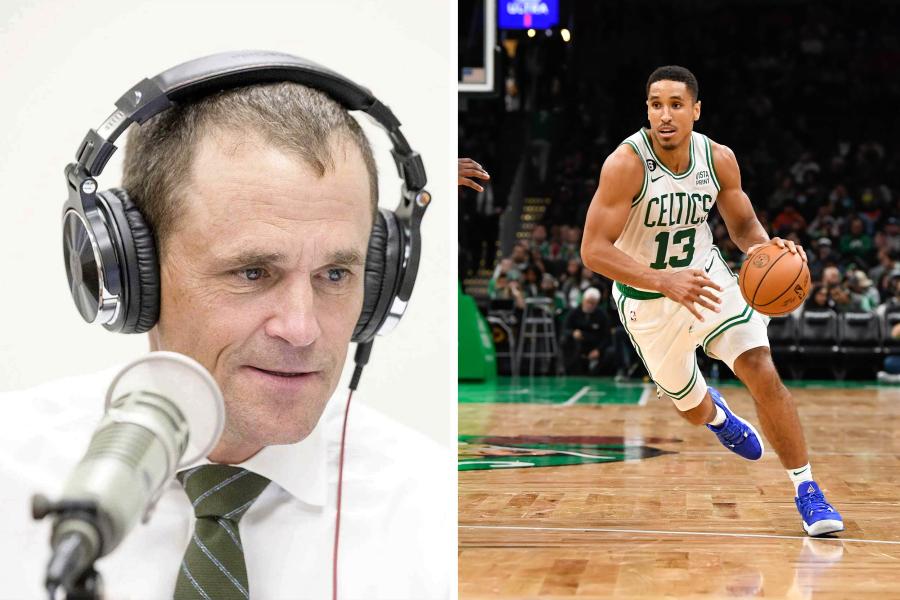
President Jim Ryan hosts Carolyn Cullen, UVA’s director of talent management, on his podcast,“Inside UVA.” (From left, photos by Dan Addison, University Communications, and Julia Davis)
Audio: ‘Inside UVA’: Learn How UVA Keeps its Talent Pipeline Pumping(21:32)
President Ryan’s latest guest is Carolyn Cullen, UVA’s director of talent management.
Jim Ryan, president of the University of Virginia: So, you were hired to do just this program, but it sounds like your duties have expanded.
Carolyn Cullen, director of talent management at UVA’s Department of Human Resources: Funny how that happens at UVA, right?
Ryan: It is.
Cullen: No, it’s great. I mean, this is my dream job, you know, to be able to help people, again, be even better at what they do or achieve what they aspire to do. And I think just by default, working here, there’s something new to learn every day and you have all these opportunities. So it’s just been honestly my honor to be able to grow my own career here as well. It’s just been really a dream come true, actually.
Ryan: Hello, everyone. I’m Jim Ryan, president of the University of Virginia, and I’d like to welcome all of you to another episode of “Inside UVA.” This podcast is a chance for me to speak with some of the amazing people at the University and to learn more about what they do and who they are. My hope is that listeners will ultimately have a better understanding of how UVA works and a deeper appreciation of the remarkably talented and dedicated people who make UVA the institution it is.
I’m joined today by Carolyn Cullen, who serves as the director of talent management in UVA’s Department of Human Resources. Carolyn is entering her 10th year with UVA HR, and among her many responsibilities, she oversees workforce and succession planning, academic staff recognition, professional development and career navigation.
Carolyn also oversees the Cornerstone Program, one of UVA’s flagship professional development programs, and will be welcoming the program’s 10th cohort this fall. Carolyn received her B.A. from the University of Mary Washington and her M.S. from Minnesota State University. Today, we are very fortunate to have her on the podcast. Carolyn, thanks for being here.
Cullen: Thank you so much for inviting me.
Ryan: So, let’s talk about how and why you found your way to UVA.
Cullen: Yeah. So, I came from the newspaper industry before I came to UVA, and at one point in my advertising career, I was a sales trainer. I really got bitten by that bug of teaching people new skills, seeing them put those skills into action, and being more confident in their ability to do their jobs even better.
At one point in my newspaper career, I decided I really wanted to get back to doing that full-time. I had been connected to some really great folks in HR here at UVA, via some local professional associations like the chamber that I was involved in at the time, and it was really impactful for me to hear the vision and the work that HR was doing to provide professional development to all employees, and I really wanted to be a part of that.
Ryan: That’s so interesting, because not many people would think of the newspaper industry and your current job is connected, right?
Cullen: Yet, I will say that they are, in that advertising is all about building relationships and creative problem-solving, and I do that every day in my role here at UVA. Both have noble missions that spoke to me personally.
Ryan: When you started, did you start in the position you’re in now?
Cullen: So, I was hired in 2014 to build a program that is now the Cornerstone Program. So that was my sole job when I was first hired.
Ryan: Oh, no kidding.
Cullen: Yeah, the University recognized that we need leaders at all levels of the organization and in all kinds of roles. And so, unlike some of our other leadership development programs that focus on a specific audience – like new managers at UVA Health, for example – Cornerstone casts a wide and deep net. So we have employees from across the entire organization – including UPG; we have foundation employees; we have all kinds of roles; people who have been here a little over a year, people who have been here double-digit years – and the purpose of Cornerstone is to accelerate the development of the participants a little faster than it might normally occur, so that they’re ready in the future for additional career progression at UVA.
Ryan: So, can you describe more fully how the Cornerstone program works, sort of from soup to nuts?
Cullen: Yeah. So, nominees are brought forward by their deans, chiefs and vice presidents. We often get nominees who bubble up to those levels by previous participants for whom the program meant so much they really want to pay it forward. We have a committee every year of past participants and past mentors who review all of the applications, all the nominations, and then make the final cohort selection.
And there are four components to the Cornerstone Program: there’s a 360 feedback assessment that each participant goes through; there’s one-on-one mentoring with someone completely outside of their normal scope of work; they also work in a small group on a project; and then they gather monthly for the classroom sessions themselves. So it’s a yearlong, in-person leadership development experience.
Ryan: And how many people participate?
Cullen: This year we have 38.
Ryan: Wow. And what is the classroom component look like?
Cullen: We choose a theme each year. This year’s theme is “transformational leadership.” And we have various speakers for part of the program who come and share their specific leadership journey.
Last week, it was J.J. Davis and Anda Webb. J.J. talked about her personal leadership journey and kind of her philosophy – she spends a lot of time on Q&A, which is a great opportunity for the participants. And then Anda walked the participants through how the University is financed, so it was kind of that operational view.
The cascade of speakers, that’s part of it. But in between, we’re asking the participants to really learn or think about what they just learned, how they might apply what they just learned, whether that’s a new skill or a different way of looking at something, and then when they come in the next month, we ask them, how do they apply what they learned last month? Are they seeing any changes?
And so those are great topics, also, for them to talk with their mentor about and help maybe solve problems and think through challenges in a different way.
Ryan: How do you go about pairing up participants with mentors? And do you ever have trouble recruiting mentors, or is that not an issue?
Cullen: I’ve been lucky in that we have more mentors than mentees.
Ryan: Oh, that’s great.
Cullen: And in fact, a lot of the past participants volunteer to serve as a mentor in the future. Over the years, we’ve had in fact, 22 past participants serve as mentors, including seven this cohort year alone. So that speaks, I think, to the desire to pay it forward, and also how much the mentoring, you know, really meant to them personally.
And so, I meet one-on-one with each incoming participant before they start the program. They do fill out a form, which is helpful, but I get a feel for what they’re looking for just by talking with them. Then, I think, through the repository of mentors with whom I’ve already met to figure out what might be a good match, because we’re purposely pairing them with someone outside of their normal scope of work. So, you might have the associate chief nursing officer in the Med Center, who’s paired with someone, say, in Advancement.
Ryan: Can I ask you, why do you do that?
Cullen: Because, in this program, we’re trying to build connections across the organization. We’re trying to introduce, for both of those parties, we’re introducing them to someone they most likely have never met before, and probably never would cross paths with. In fact, the feedback I get from the mentors is, “Gosh, I hope they learned something, because I learned so much about what they do. I had no idea.” So that way, the mentor really serves as a neutral third party, as a sounding board for the mentee, and they can really learn from one another.
Ryan: Tell me a little bit about the projects. Do the participants pick their own projects? Do they pick their teams? Or are those assigned?
Cullen: They do. It’s all up to them.
So in the fall, I solicit project nominations, I start with the vice presidents, deans and chiefs, and then they cascade that request down in their organizations. So it’s kind of fun – we never know what we’re going to get every year, how many we’re going to get or what you know, they’re going to be about.
I share all of those with the participants. And at their November classroom session, the project nominators are invited and in five minutes, they pitch their project. So, what isn’t on the form that people might be interested in knowing, like “Where did this idea come from?” And you get a sense for the passion behind the project.
Then when the pitches are done, the nominators leave and the participants – again, they’ve already reviewed, they have an idea in their mind of maybe a first choice and a second choice – then they select the one that they want to work on. It’s an organic process; we just kind of see how it ends up in the room, and so as a result of that, you have some small project teams, sometimes two or three people. And then you have some large project teams. I think the biggest one this year is eight.
Ryan: I love the fact that the projects are connected to work that people want. That is, it’s not that the participants think it would be interesting to learn about something – like, these are actual projects that people working at UVA want to tackle.
Cullen: Right, and they’re deceptively simple. Sometimes they might not be urgent, but they’re complex. They’re fuzzy around the edges. Sometimes they’ve got a lot of layers to them. And there’s usually, they tend to be discovery in nature. So there’s usually some element of data to collect or research that needs to be done – like looking at peer institutions, for example, to figure out how can we solve this problem. And the nominators, it’s usually something that they either haven’t had a chance or capacity to get to, and/or they want an outside group to look at it with a fresh set of eyes and give them a recommendation.
Ryan: Right. Almost like you would ask a consultant to do.
Cullen: Correct. Yes.
Ryan: So what have been some of your favorite projects?
Cullen: It’s so hard to narrow them down. Some past ones – and I know you’re familiar with the one that was figuring out how can we better support our student veterans, our military veterans who are students. We now have a veteran support center open at Newcomb and the project team that worked on that contributed to that student center becoming open.
The library is always good for some really creative projects that they want to get to. Several years ago, they had submitted one that was called “Discovering Hidden Collections Across Grounds.” And so they wanted a project team to go knock on people’s doors and look in the basements of buildings to find what are those UVA artifacts that exists that we need to know about? We need to know the condition they’re in, where they’re located. And I wrote down some things that they found – they found a 19th-century telescope. They found a meteorite that fell in Forksville, Virginia, in 1924.
Ryan: So wait, what buildings were these in?
Cullen: That I couldn’t tell you, but I’m sure we could dig it up for you.
They found the 1906 physics department’s annual report signed by Dr. Alderman.
Ryan: Holy cow.
Cullen: They found intramural sports programs from the 1940s. And they found a picture of Lady Astor.
Ryan: Oh, my gosh.
Cullen: Yeah, pretty, pretty fascinating. We’ve also had a couple more – one that comes to mind last year was submitted by the Office of the Architect, and they wanted a group to look at the trails behind O-Hill and make recommendations for how they could improve, improve the trails, I didn’t even know there were trails behind O-Hill. So that was a real experiential project, and they worked with some community partners who use the trails regularly.
Ryan: I love those trails. They are great.
Cullen: I definitely need to check them out. And part of the project was, “How can we make more people aware of the trail system so that they engage with them?”
Ryan: Yeah. No, it really is a resource.
Cullen: And then one more that I thought was interesting last year: Facilities Management has been a great supporter of Cornerstone over the years. And last year, they submitted a project to catalog or identify all of the different languages that are spoken by FM employees, with the goal of ensuring that their processes, for example, for interviewing and for onboarding new employees are as inclusive as possible. The project team identified 34 different languages spoken in Facilities Management, so that was pretty exciting.
Ryan: Yeah, that’s a lot. So, what are you hoping that the participants will get out of working on the projects? I can see how they really benefit the University, given that they’re real.
Cullen: Right. And they are stretching themselves; they have to work on a project that’s outside of their normal scope of work, so they’re learning about something new.
The other thing that the projects do for them, personally, besides feeling like they’re moving the organization forward, and of course, they’re making a difference, not only in their day-to-day work, but in another way, as well, is they might have identified something from their 360 feedback survey that they want to work on personally. And so, in that small project team, it’s a great, low-risk experiment area, right, that they can try out a new behavior in a new way with people who have they’ve never met before, and don’t have any preconceived notion of how collaborative they are, or how they’re working on their communication skills, for example.
Ryan: Right. Do you keep track of participants? Do you have alumni gatherings, or follow how people have moved in their careers?
Cullen: We do. Actually, there is a Cornerstone alumni network. They put on usually a couple of events a year; sometimes that’s just a social gathering. We have one coming up in March, where we’re going to hear from some past project sponsors as to how they’ve moved those projects forward in the years since the projects were completed.
And while we’re very clear at the beginning of the program that participating in the program does not guarantee promotion or advancement, we do track folks’ career progression. We can report that over half of past participants, since completing the program, have either been promoted at UVA or have significantly expanded their scope of responsibilities at UVA.
We think that that’s due to a number of things, right? They’ve learned some new skills, they’ve expanded their network and made a lot more connections, and they now feel more confident in their ability to drive change, foster innovation and solve problems at UVA.
Ryan: The thing I love about this program, or one of the things I love about this program is, you know, we’ve been talking a lot lately about pipelines, opening up the door to UVA, and pathways, creating pathways for people who want to make UVA their home for their entire career. And this seems, this is a really key component of that.
Cullen: Yeah. It falls under all the things that we do. I mean, we’re higher ed, right? So we should encourage and enable employees across the entire organization to learn wherever, however, whatever they want, because that’s all going to help them. And so from an internal mobility perspective, one of the things I think Cornerstone does a good job of is the exposure and awareness of roles and functions across the University – so that as people think about their career growth, if they’re in the Academic Division, for example, and they’ve never thought about working in UVA Health, there’s a whole world out there that would benefit from their skills, and vice versa.
Ryan: Right. So, for anyone listening who’s thinking about participating in this program, my guess is they’re wondering, do the managers of participants give them time to participate? Or is this something that they just have to fit in on their own time?
Cullen: Right. That’s why we start with the VPs, deans and chiefs, so that when those nominations come through, we know that they’ve got the support and endorsement at the highest level, because it is a time commitment. It is during work time, it is part of your job. So to make sure that that folks are supported, that’s a key piece of it, yeah.
Ryan: Right. So, you’re celebrating your 10th anniversary. So first of all, congratulations.
Cullen: Thank you.
Ryan: That’s a great milestone. Anything you would like to change in the program going forward?
Cullen: You know, we collect feedback from the participants all along the way, including at the end of the program each year, and we make tweaks and adjustments based on that. Sometimes that’s even about the catering choices – brownies are really a big deal. But hey, whatever is going to make the experience better, right?
And so, every year things look a little different, speakers change out, activities, et cetera, but the four core components remain the same. I think what we’re really focused on continuing and expanding in the future, though, is helping managers support their employees – regardless of what program they may or may not be in, what roles they’re in – support their employees’ career aspirations, and with very specific ways of helping them do that.
You know, we just got the news about our rankings on the latest Forbes list of great employers, and part of the criteria for that is professional development and the ability to grow your career. We know that that’s a strong retention factor, right? It reduces turnover when people know that they’re going to be supported, that their manager supports them, that they’re encouraged to explore new opportunities at UVA. While no manager ever wants to lose a great employee, even if it’s to another division at UVA, and for the greater good, knowing that that’s part of my responsibility as a manager, and that that’s going to come back to me over time, tenfold, because I’m going to be known as an incubator of talent, and people are going to want to come to my school or unit and work with me.
Ryan: Yeah, that’s a very smart way of thinking about it. So, you were hired to do just this program, but it sounds like your duties have expanded.
Cullen: Funny how that happens at UVA, right?
Ryan: It is.
Cullen: No, it’s great. I mean, this is my dream job, you know, to be able to help people, again, be even better at what they do or achieve what they aspire to do. And I think just by default, working here, there’s something new to learn every day and you have all these opportunities. So it’s just been honestly my honor to be able to grow my own career here as well. It’s just been really a dream come true, actually.
Ryan: So, it sounds like you’re very busy at UVA, but I hope you have time outside of UVA. And when you do, how do you like to spend it?
Cullen: Well, we know I’m not walking in the O-Hill trails as much as I should be. But, I mean, this area offers so much to do. My husband and I love to visit local wineries and breweries and especially share that with our friends and family that come to visit. That’s a lot of fun. Of course, all the history and the restaurant choices. I mean, you just can’t go wrong.
Ryan: Well, Carolyn, I want to thank you for your time and thank you especially for all that you do to help our employees pursue their interests and advance their goals and reach their potential.
Cullen: Thank you so much.
Aaryan Balu, producer of “Inside UVA”: “Inside UVA” is a production of WTJU 91.1 FM and the Office of the President at the University of Virginia. “Inside UVA” is produced by Jaden Evans, Aaryan Balu Mary Garner McGehee and Matt Weber. Special thanks to Maria Jones and McGregor McCance.
Our music is “Turning to You” from Blue Dot Sessions.
You can listen and subscribe to “Inside UVA” on Apple Podcasts, Spotify or wherever you get your podcasts. We’ll be back soon with another conversation about the life of the University.
She got her start in newspapers, but about 10 years ago Carolyn Cullen took a U-turn and became the University of Virginia’s director of talent management in the Department of Human Resources.
She oversees workforce training and succession planning, academic staff recognition, professional development and career navigation, and is President Jim Ryan’s guest on the latest edition of his podcast, “Inside UVA.”
One of her responsibilities is overseeing the Cornerstone Program.
“Unlike some of our other leadership development programs that focus on a specific audience, like new managers at UVA Health, for example, Cornerstone casts a wide and deep net,” Cullen told Ryan.
“So, we have employees from across the entire organization,” she explained. “The purpose of Cornerstone is to accelerate the development of the participants a little faster than it might normally occur, so that they’re ready in the future for additional career progression at UVA.”
This year, 38 people are participating in the program.
“We choose a theme each year. This year's theme is ‘transformational leadership,’ and we have various speakers for part of the program who come and share their specific leadership journey,” Cullen said.
Recently, J.J. Davis, UVA’s executive vice president and chief operating officer, and Anda Webb, the senior adviser to UVA’s executive vice president and provost, shared their personal leadership evolutions with the Cornerstone participants.
It’s that sort of full-circle professional mentorship that makes the University a special place to work and learn, Cullen told Ryan
You can learn more about Cullen and the Cornerstone Program by streaming “Inside UVA” on most podcast apps, including Apple Podcasts, Spotify or YouTube Music.
Trending
Media Contacts
University News Senior Associate Office of University Communications
jak4g@virginia.edu (434) 243-9935