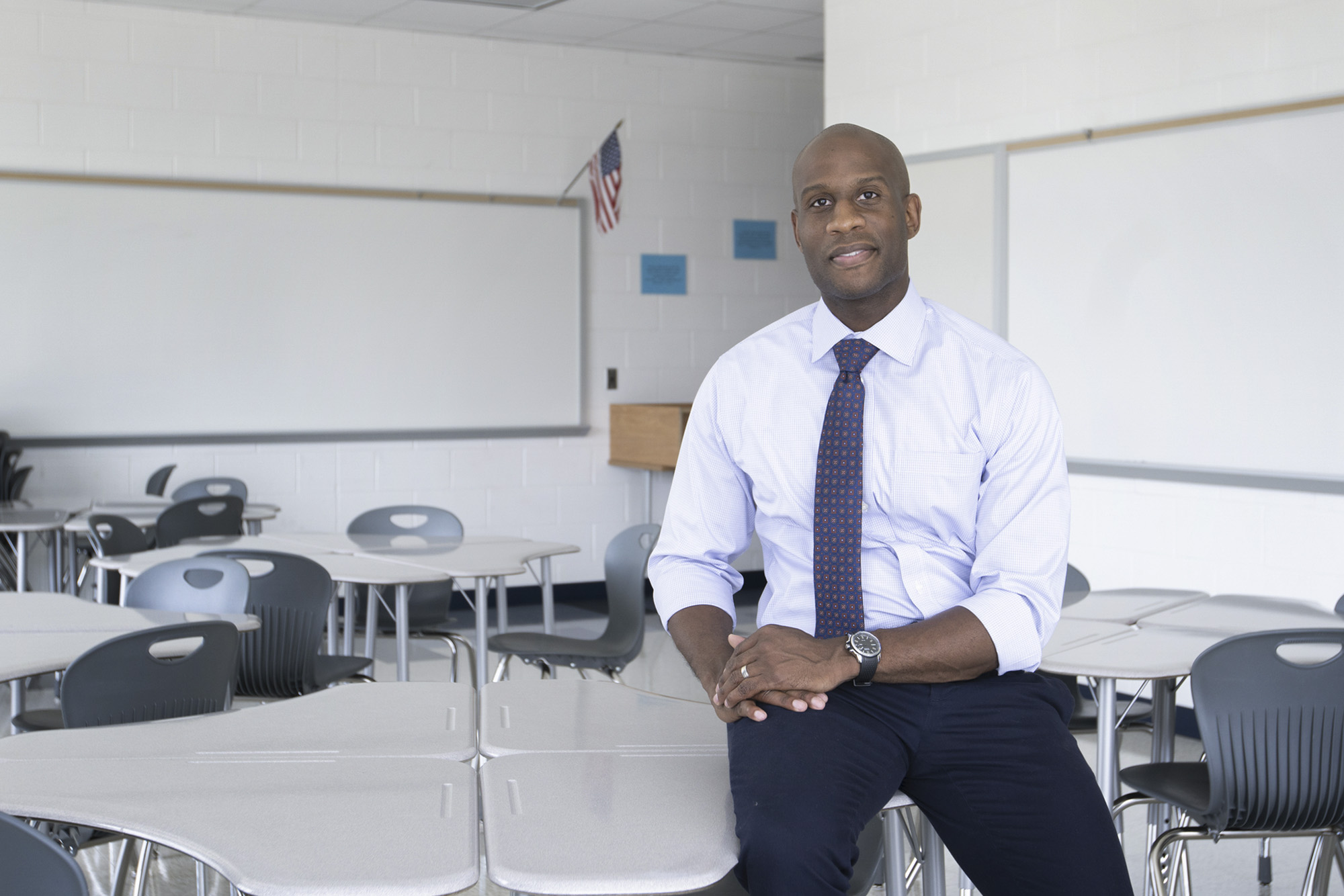




The upcoming school year holds many uncertainties. When Joseph Williams considers what will make this year challenging, his answer is twofold:
“COVID is a public health crisis, and a pandemic, and systemic racism is also a public health crisis and a pandemic,” he said. “Students have to battle with both of those.”
Williams, an associate professor of counselor education in the University of Virginia’s School of Education and Human Development, said the past 18 months have only highlighted and exacerbated existing mental health and academic issues that students were facing prior to March 2020. Early research points to elevated levels of mental health problems like depression and anxiety among students of all ages and racial/ethnic backgrounds: “We see that kids are coming into schools a lot more fragile than they have been in the past,” he said.
As for how to address those challenges, for Williams, one thing is clear: Ensuring students’ success, both academic and otherwise, depends on attention to social-emotional learning – a student’s ability to do things like manage stress and interpersonal conflict -- with equity in mind.
The Role of School Counselors
Why social-emotional learning? After a year or more of disrupted education, many schools and parents are concerned about making up gaps in academic achievement. Williams’ research focuses on the academic resilience of K-12 students of color and those from low-income backgrounds; he advocates for a “whole-child approach,” where schools teach social-emotional skills alongside content and academic skills, like studying and organization. That’s because social-emotional skills are directly tied to academic outcomes.
“There is close to probably two decades of research that demonstrates that schools that promote social-emotional learning get positive results,” he said. “The bottom line is that social-emotional learning leads to improved academic outcomes and improved behavior.”
That’s where school counselors come in.
“School counselors are often the first line of defense in identifying and addressing social-emotional needs, because they have unique training to address those issues,” he said.
School counselors are trained to support students in numerous ways – both directly, through individual or group counseling; and indirectly, through their work with parents, teachers and administrators.
For the 2021-22 school year, Williams highlighted the importance of one tactic in particular: consultation, or assisting teachers, caregivers, administrators or other adults in their relationships with students. Consultation can range from one-on-one meetings to designing and leading professional development training. Examples of topics could include educating parents on social-emotional learning, and why it matters; helping administrators address issues with students; or increasing teachers’ capacity to identify signs and symptoms of depression and other mental health problems.
The major benefit of consultation, he said, is that school counselors can broaden their impact by working through other adults who make up students’ support systems. In many schools – where a single school counselor is responsible for serving hundreds of students – that’s an extremely valuable tool.
Importantly, Williams emphasized that school counselors’ impact hinges on school leadership. In order to best support their students through a challenging year, school leaders will need to recognize the unique expertise that school counselors bring to the table and allow them to use their skills appropriately.
Transformative Social-Emotional Learning
Critically, Williams said a whole-child approach in 2021 also needs to consider how students have been affected by the racial upheaval of 2020.
Williams highlighted a concept called “transformative social-emotional learning,” which considers traditional social-emotional learning practices through an equity lens. In part, it acknowledges that important social-emotional competencies are expressed very differently across cultures, races and ethnicities. It also applies core social-emotional concepts to content that addresses racial issues.
“For example, social-emotional learning teaches conflict resolution,” Williams said. “So how do we apply conflict resolution to some of the racial issues that we’re seeing today? How do we help kids make sense of white supremacy, police shootings of unarmed Black and Brown individuals, or the storming of the United States Capitol?”
Another example could be working with students to improve critical consciousness – the ability to recognize and analyze systems of inequality – by exploring personal, racial/ethnic identities and privileges and how they shape our experiences in the world.
One way or another, adults in school systems need to be prepared to address the questions and concerns about race and racism that students will bring into schools this year. “The reality is that kids are having these conversations online, and they are going to continue having these conversations underground when schools return,” he said.


