
After witnessing a teammate’s asthma attack, a UVA student built a wearable inhaler

Miles Lanham arrived at the University of Virginia eager to build something of his own.

“I came into college knowing I wanted to start something,” said Lanham, now a third-year biomedical engineering major. 

That drive led him to create Métopi, a company focused on making lifesaving medication easier and faster to access. The company’s inhaled drug-delivery platform turns a rescue inhaler into a compact wearable device, designed to improve accessibility and drug efficacy in respiratory and neurological emergency care. 

Lanham’s entrepreneurial ventures have taken many forms throughout the years, beginning with a love for Legos and homemade inventions that evolved into building projects in a friend’s garage. 

“We’d build bows and arrows. We also had this super powerful drill and almost made a working car with it,” he said. 

In high school, he launched another startup called SorboStrap, a waist belt designed to reduce strain from carrying backpacks.
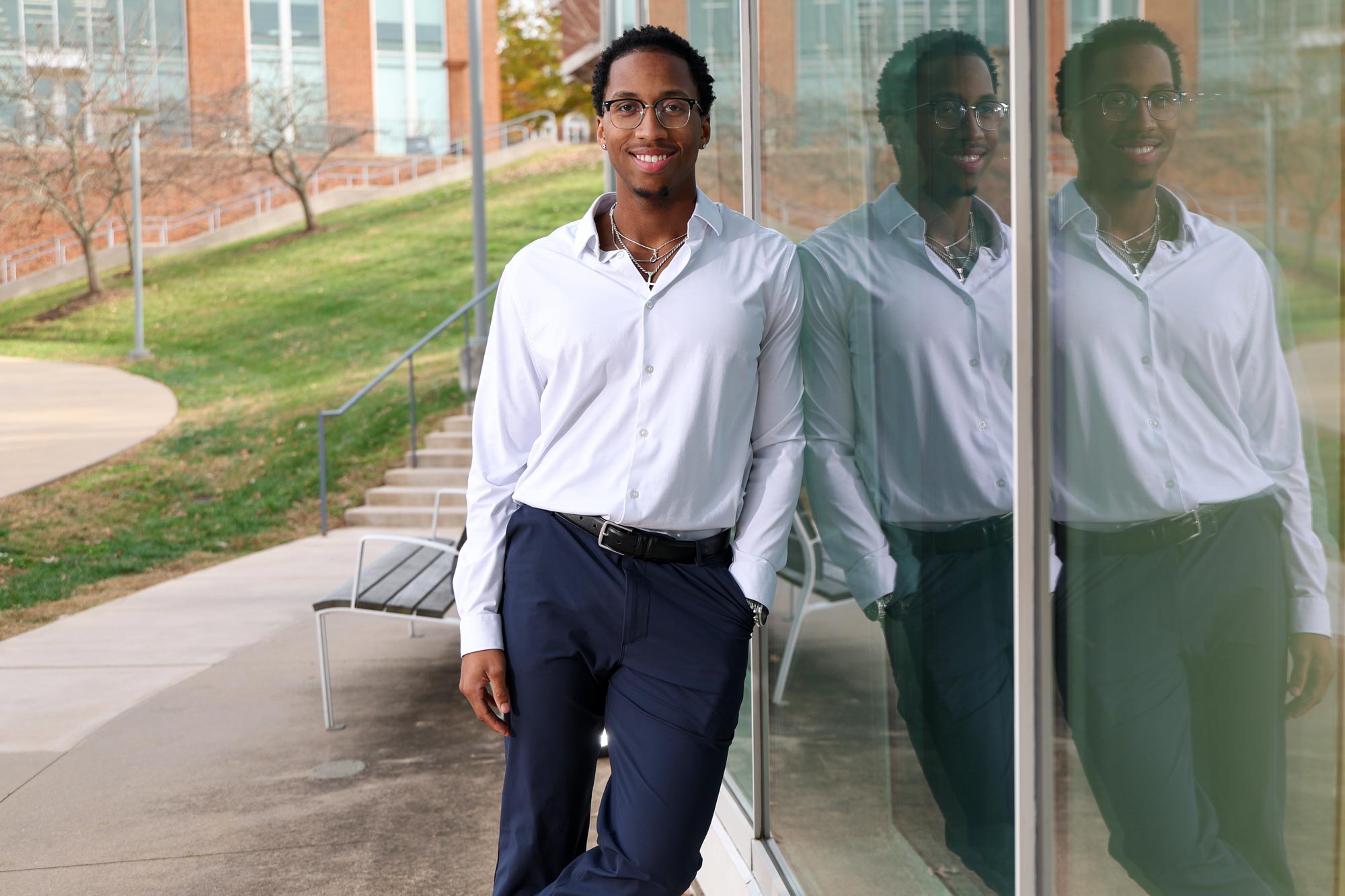
Miles Lanham

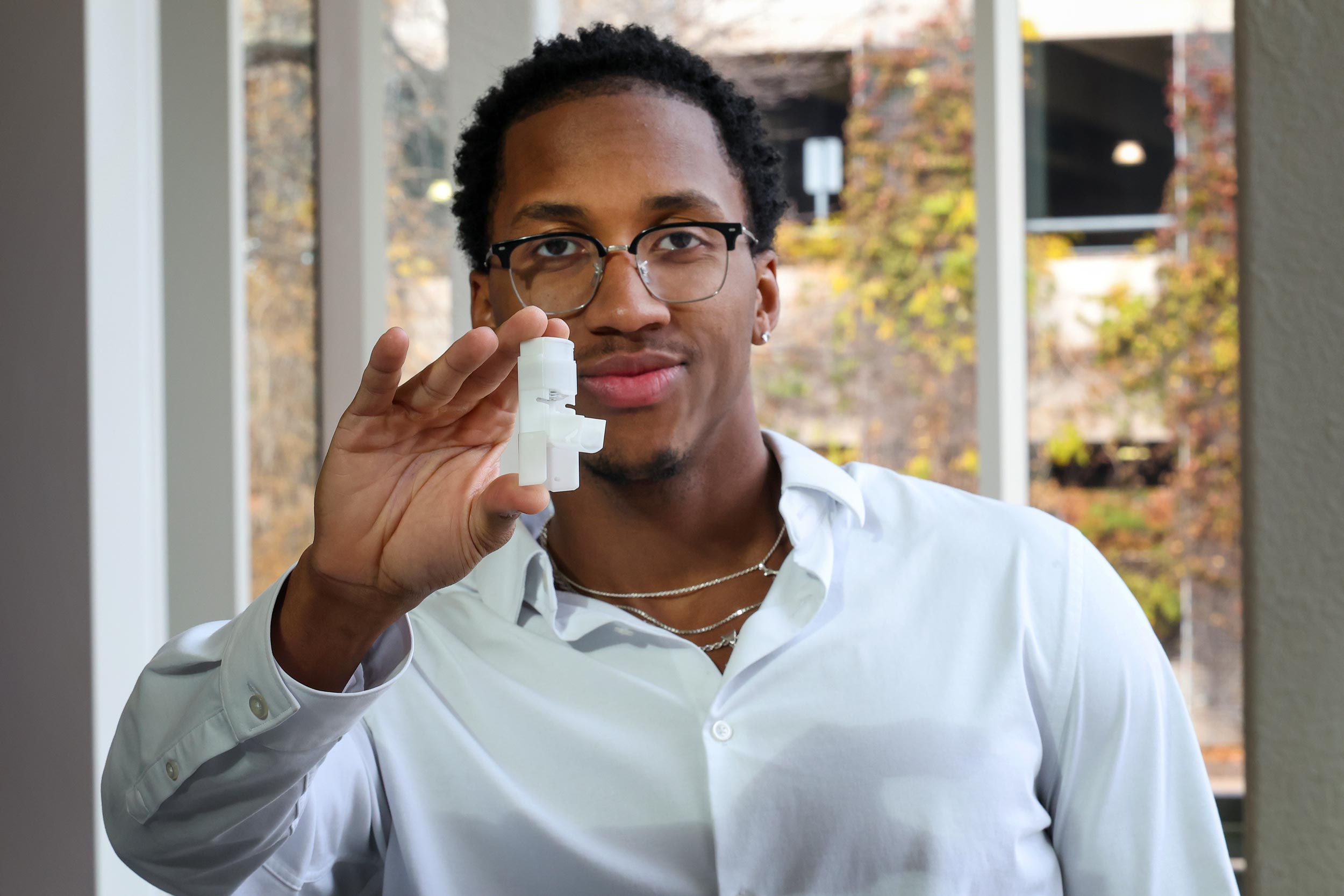
Throughout his journey, Lanham reflects on the importance of seeking resources, the experiences that have shaped his progress and his plans to continuing building Métopi. (Photo by Matt Riley, University Communications)

Now, Lanham’s efforts are in building and scaling Métopi. His original idea for the project came after witnessing a teammate live through a health crisis. 

“I ran track my first year here. At a practice, my teammate had an asthma attack during his workout and couldn’t access his medication,” he recalled. The experience inspired him to dig deeper for solutions. 

“I grew up with asthma and could relate to those things, but I never really thought about it until that happened. Track practice was a wake-up moment,” he said.

When it came to the process of starting the company, Lanham began with the basics. “I started technical; it was me doing all the engineering,” he said.

Now, he is at the operational stage. “Having an idea is one part of the story, but running it by people who are going to use it is the most important,” he said. Lanham has spoken to over 400 patients and health care providers, taking feedback and making sure the product is well received. 

Discovery and Innovation: NASA selects UVA researcher for asteroid mission

Lanham added that The Foundry, the University’s center for student entrepreneurship, has also been a valuable resource for him. McIntire School of Commerce assistant professor Adam Kerpelman, who is also assistant director of student entrepreneurship at UVA Innovates, has worked with Lanham as he continues to build his company.

“I can give all the advice in the world and assign homework, but when it comes to startup advice, the person I’m talking to has to go on and do things,” Kerpelman said. “Miles has really killed it, constantly looking for advice from everyone around him.” 

One piece of advice was for Lanham to compete in the Entrepreneurship Cup, UVA’s annual flagship entrepreneurship competition. 

“It was a super foundational thing. When I first started, I was like, ‘What’s the first step I can take to get this off the ground?’ And they said, ‘You need to do E-Cup,’” Lanham said. 

After making it through multiple rounds, Lanham placed second in the 2024 competition, additionally winning the Audience Choice Award and $20,000. He then went on to win the Washington University in St. Louis BIG IdeaBounce, receiving $50,000 in funding. Most recently, he won a $5,000 grand prize and Student Pitch Award at the Accelerate Investor Conference held at George Mason University.

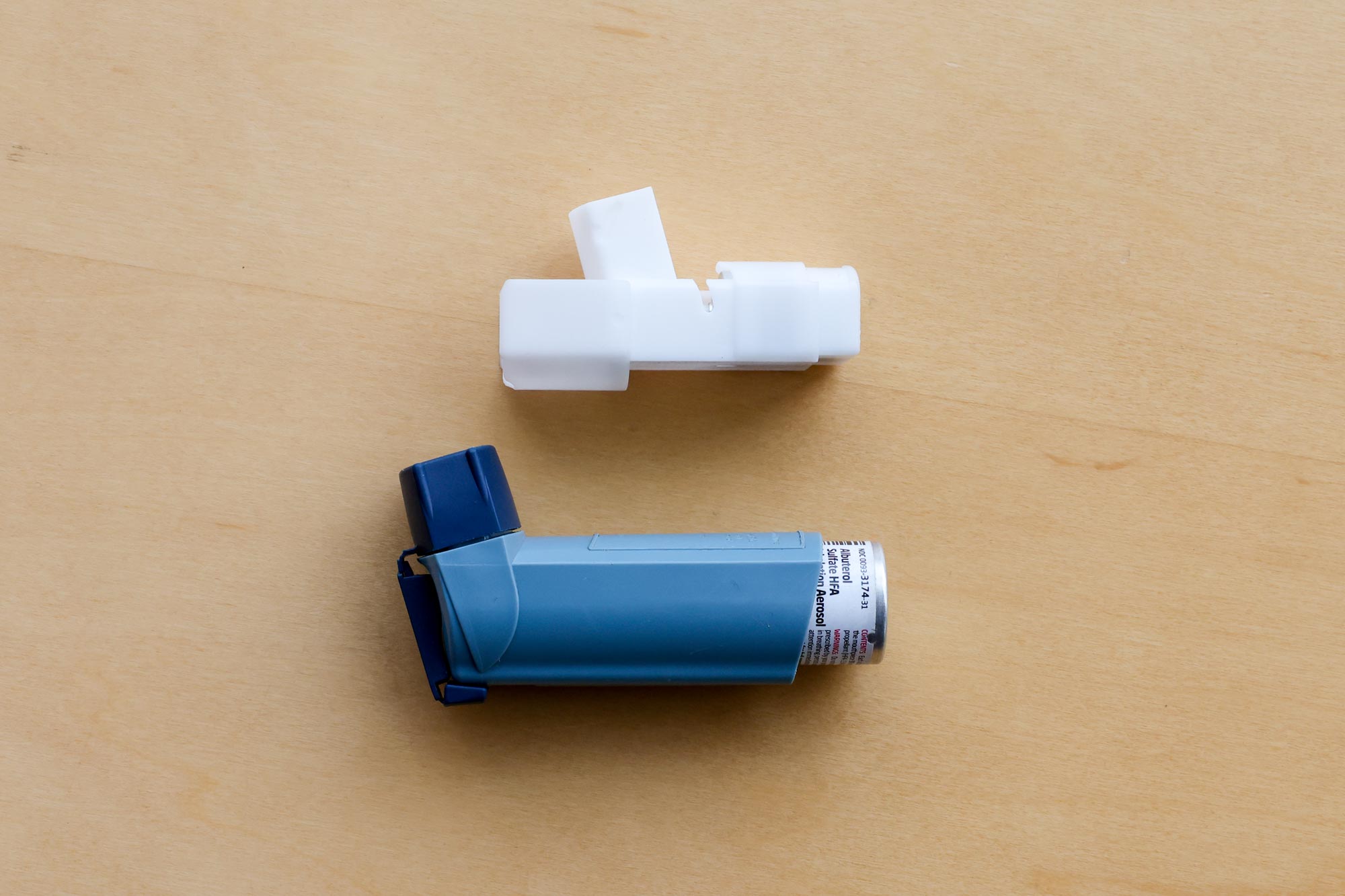
Lanham's device prototype next to a standard inhaler showing the innovation in size and wearability.

After many 3-D printed iterations, Lanham’s device, top, is engineered for efficiency, wearability and easy access, compared to a regularly sized inhaler, bottom. (Photo by Matt Riley, University Communications)

In all, he has raised nearly $200,000 for his company and is on track to close his next round of funding by spring. 

On top of a demanding engineering courseload, Lanham’s efforts remain focused. 

“I like putting in long nights and working hard,” he said. “When you start a company, you work super hard for weeks and nights, and nothing happens. Then all of a sudden, everything changes.”

Media Contacts

Mike Mather

Executive Editor University Communications