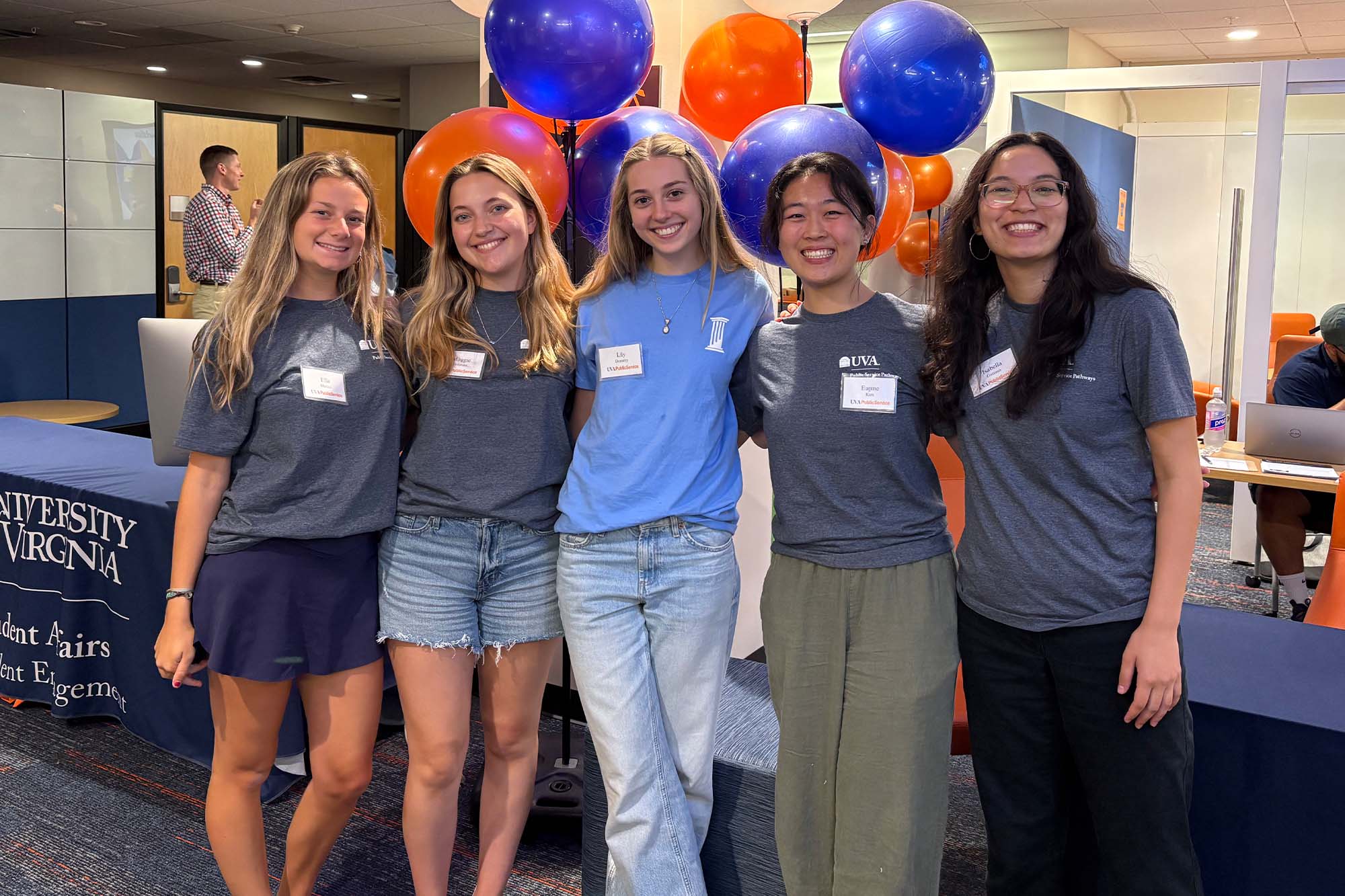




Four years ago, Cole Kleiman wandered the University of Virginia’s South Lawn amid the carnival-like Student Activities Fair. There seemed to be something for everyone: a salsa dancing club, a cereal club, a club for Taylor Swift fans.
“I remember going to the club fair and feeling really overwhelmed, because there are so many different opportunities,” he said.
But nothing grabbed him, and he worried about what he needed to do to fit in at UVA. In high school, he volunteered with a Massachusetts nonprofit, Hope & Comfort Hygiene Hub, distributing items like soap, toothpaste and deodorant in his community. That kind of public service motivated him.
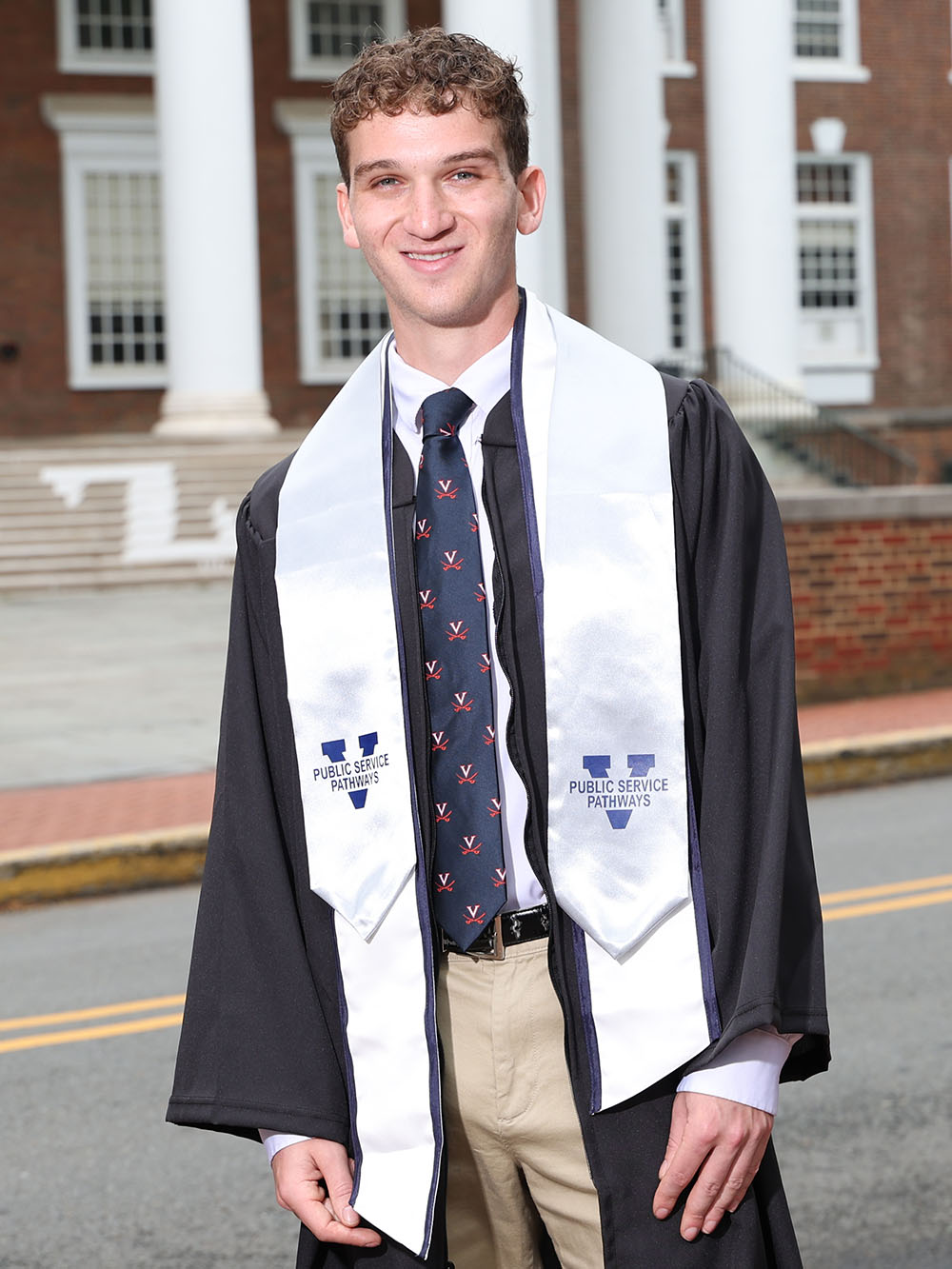
Kleiman, who will stay at UVA to study law, says the Public Service Pathways program helped broaden his view of what justice can be. “Justice can take so many different forms,” he says. (Photo by Matt Riley, University Communications)
Then he recalled seeing an email that said something like: “We’re starting this new program. People should come check it out.”
The new program was Public Service Pathways. The initiative, launched in 2022, aims to connect undergraduates to public service “as a personal commitment, a lifelong practice, even as a career,” according to its website.
Lily Dorathy was equally intrigued.
“For me, it meant bringing the public service culture to UVA,” Dorathy said. “Public service has always been in the DNA of UVA.”
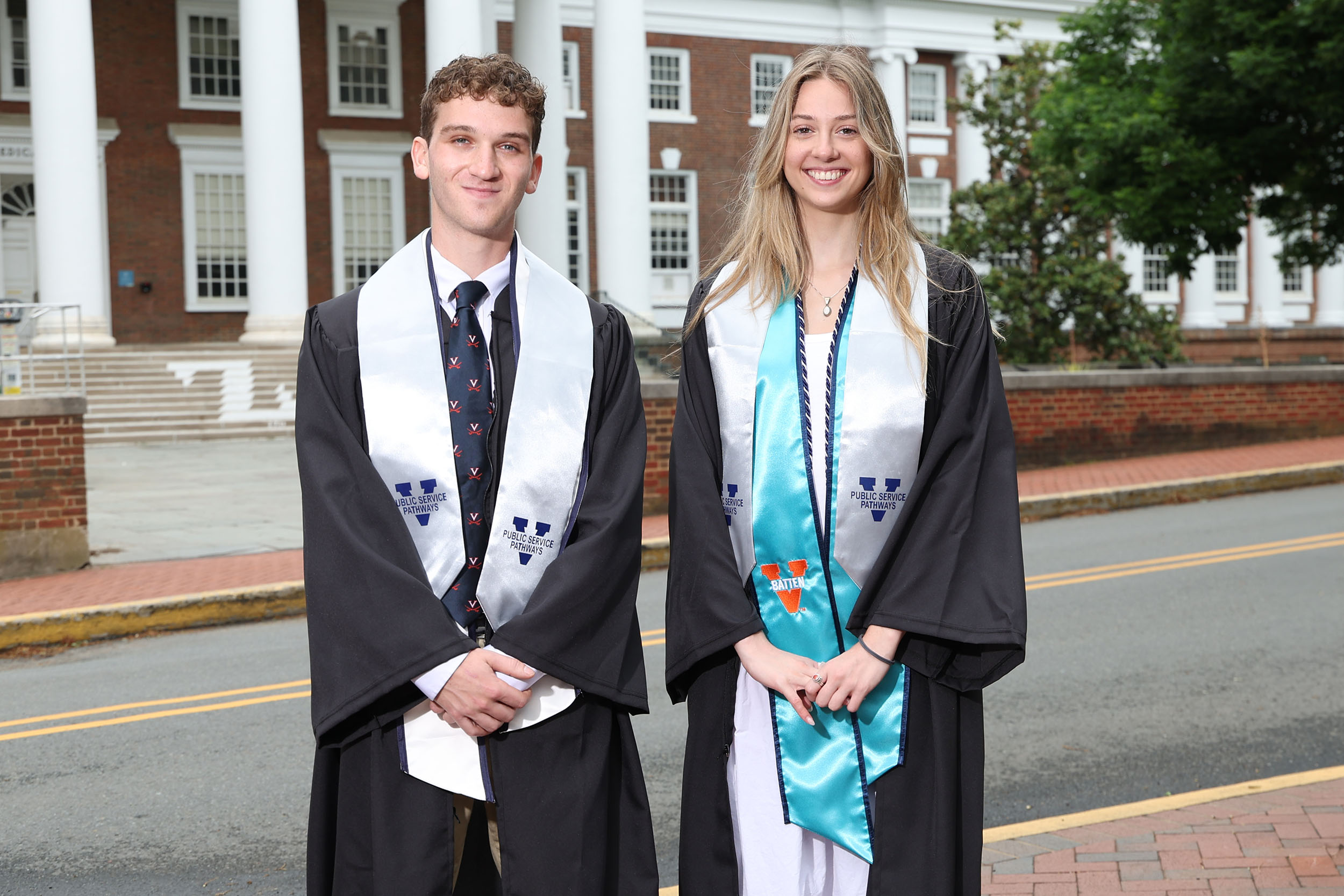
Kleiman and Dorathy recently joined 89 other students in the Public Service Pathways’ first graduating class as they gathered to receive their public-service stoles ahead of this weekend’s Final Exercises.
“It’s not a major, and it’s not a minor,” Louis Nelson, the vice provost for academic outreach, said. “It’s a four-year experience that prepares students for a life of public service.”
The goal, Nelson said, is to encourage all undergraduate students to consider how public service could be woven into their UVA experience, and then life beyond Grounds.
“This isn’t only about sending students into nonprofits or public service,” Nelson said. The program welcomes budding engineers, artists, chemists, data scientists, philosophers, teachers – essentially any major. “This will be valuable to graduates whether they’re in D.C., Wall Street, small-town America or Silicon Valley.”

Dorathy, double major in public policy and leadership and applied statistics, says the four years in the program taught her that public service can be an integral component of every major, even math-focused ones. “For me, numbers tell stories,” she says. Understanding the stories behind the numbers will help her be a better policymaker. (Photo by Matt Riley, University Communications)
Students are assigned mentors, create public service journals, attend lectures, engage with community leaders and regularly participate in volunteer opportunities across the region.
You don’t have to do everything, Dorathy said. But, she added, “This is one of those programs where you get out of it what you put into it.”
A double major in public policy and leadership and applied statistics, Dorathy said it might sound strange to combine math with public service, but there are people behind every number.
“For me, numbers tell stories,” she said. “If you’re looking at race, literacy rates, graduation rates, income – all of those numbers tell a story about the community and the factors that are influencing the community.”
The program helped her focus not just on what the numbers reveal, but why the numbers are what they are.
“You have to be able to analyze those numbers, find the relationships, find the correlations, which is like the string between them all,” she said. “Being able to find those patterns is groundbreaking for changing policy.”
The program has seven pathways. Kleiman, who will attend the UVA School of Law next year, settled on the Justice Pathway. Dorathy chose the Diplomacy and Security Pathway.