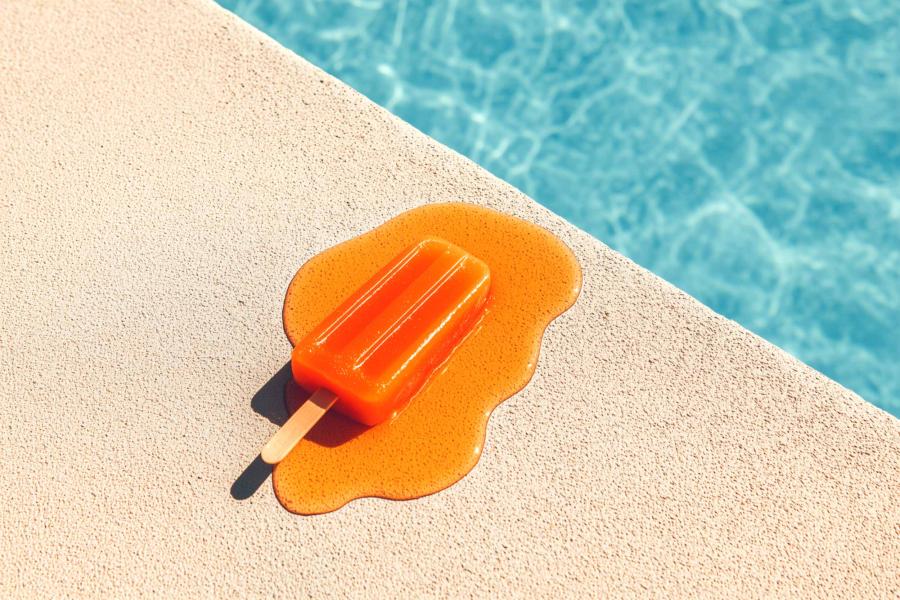


There’s a new dome over Grounds for the Fourth of July, and it isn’t perched atop the Rotunda.
The University of Virginia, the state and much of the East Coast are sweltering under a heat dome, a ridge in the jet stream that forces cooler air northward and promises to push the thermometer past 100 degrees.
The dome is expected to hover through most of the holiday weekend, subjecting celebrants not only to high temperatures but also to humidity ranging from 60% to 70% or more.

Scott Doney, the Joe D. and Helen J. Kington Professor in Environmental Change in UVA’s Department of Environmental Sciences, says human-driven climate change is contributing to more frequent and intense heat waves. (University Communications photo)
“The National Weather Service is forecasting dangerously hot temperatures and high humidity across our region over the coming days,” UVA Executive Vice President and Chief Operating Officer Jennifer “J.J.” Wagner Davis wrote in an email to the University community. “We encourage everyone to take extra precautions to protect themselves from heat-related illness.”
Davis said the University community is encouraged to use air-conditioned buildings whenever possible during the hottest parts of the day.
It may seem obvious that July and heat go together, but experts say heat domes are serious business. Europe has reported more than 1,300 heat-related deaths this summer due to similar weather phenomena, with heat waves hovering over the continent and the U.K.
“Human-driven climate change is contributing to more frequent and more intense heat waves,” said Scott Doney, the Joe D. and Helen J. Kington Professor in Environmental Change in the UVA Department of Environmental Sciences. “Solutions include adaptation – expanding access to air conditioning and cooling centers; redesigning urban areas to lower summer peak temperatures with more trees, white roofs, etc. – and mitigation by lowering and eventually eliminating human-induced emissions of heat-trapping gases like carbon dioxide and methane.”