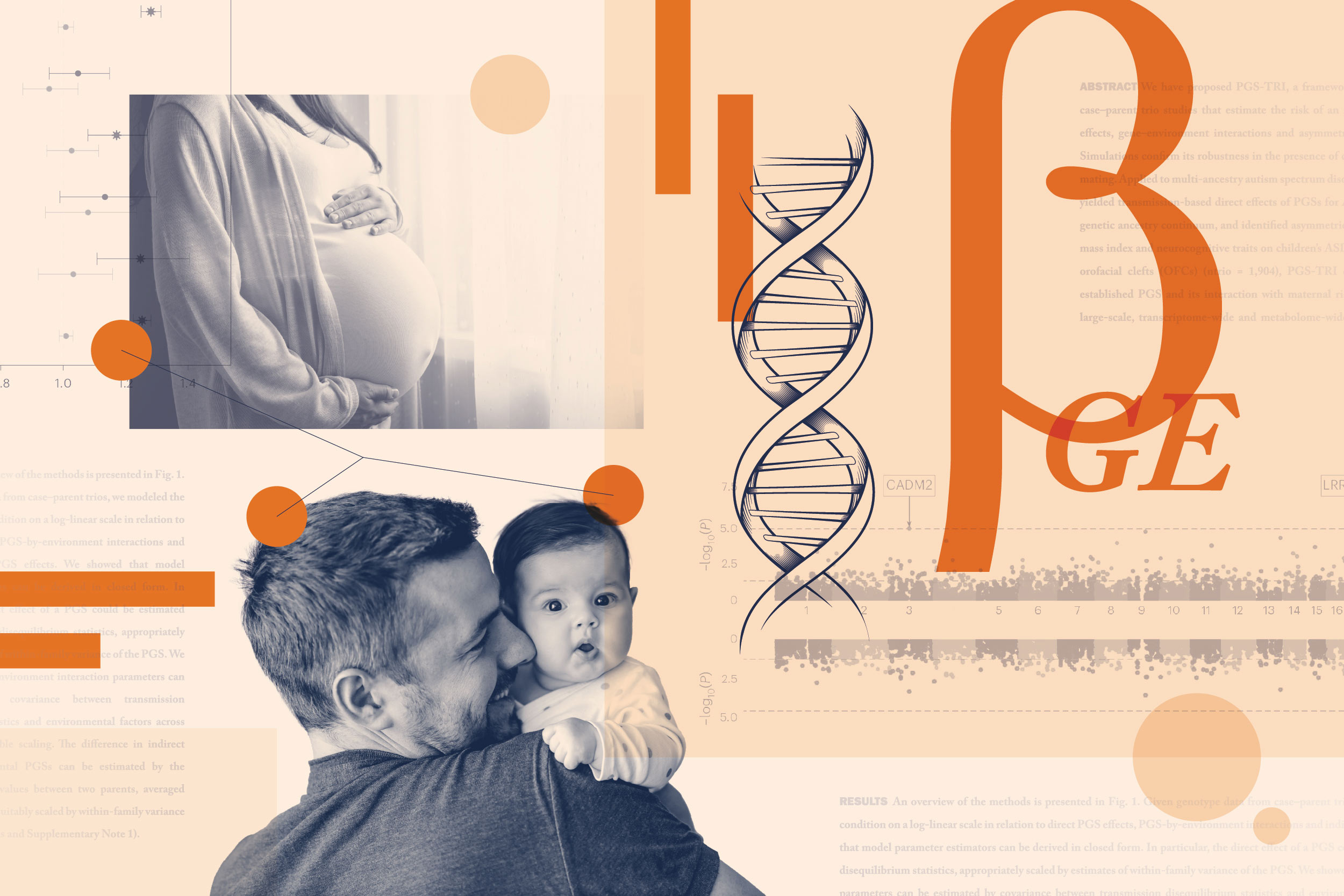




Researchers from the University of Virginia and Johns Hopkins University have developed a new tool that will help scientists better understand how genetic conditions like autism spectrum disorder pass between parents and children.
Ziqiao Wang, an assistant professor of genome sciences in the UVA School of Medicine, is developing statistical methods that seek to define the interplay between genes and the environment. Collaborating with Nilanjan Chatterjee and colleagues at Johns Hopkins University, she created a tool called PGS-TRI.
Wang spoke with UVA Today about her latest findings, published in Nature Genetics, and what is most important for families to know.

Ziqiao Wang, an assistant professor in the UVA School of Medicine, researches how genetics, genomics and environmental factors drive the development of human diseases. (Contributed photo)
Q. Can you summarize your latest research?
A. We wanted to understand more precisely how genetic differences are related to a child’s risk of developing conditions like autism spectrum disorders.
Many traits are influenced by thousands of genetic differences, and each of them has a very small effect. So, we used something called a “polygenic score” to summarize these many genetic influences, with the goal of developing a better way to study these scores while also taking parents and the family environment into account.
We then introduced a new statistical framework called PGS-TRI that’s designed for studies involving a child and their parents to estimate several effects, including the differences between maternal and paternal effects. In very simple terms, it gives us a more detailed picture of how genes, parents and environment may be connected to a specific child’s developmental condition.
Q. What is the most important thing for people to know about your discovery?
A. The main message is that genes and environment act in very complicated ways to contribute to a condition. So, by studying children and their parents together, we can get closer to understanding these relationships. Better statistical methods can actually help us avoid misleading conclusions and ultimately improve how genetic research is interpreted.
We analyzed two conditions: autism spectrum disorders and orofacial clefts. For autism, we analyzed genotype data from more than 18,000 affected parent-child groups. … We found evidence for direct genetic effects associated with polygenic scores for autism and several other neurocognitive traits. We also found evidence that parental polygenic scores for body mass index and some neurocognitive traits were associated with autism risk in the children through indirect effects.


