As UAB’s graduate school dean, she oversaw programs enrolling more than 7,500 students in dozens of wide-ranging fields including accounting, art history, education, engineering and vision science. She served as principal investigator for an NIH-funded program to increase diversity in the neuroscience workforce and chaired a UAB task force for interdisciplinary research and education.
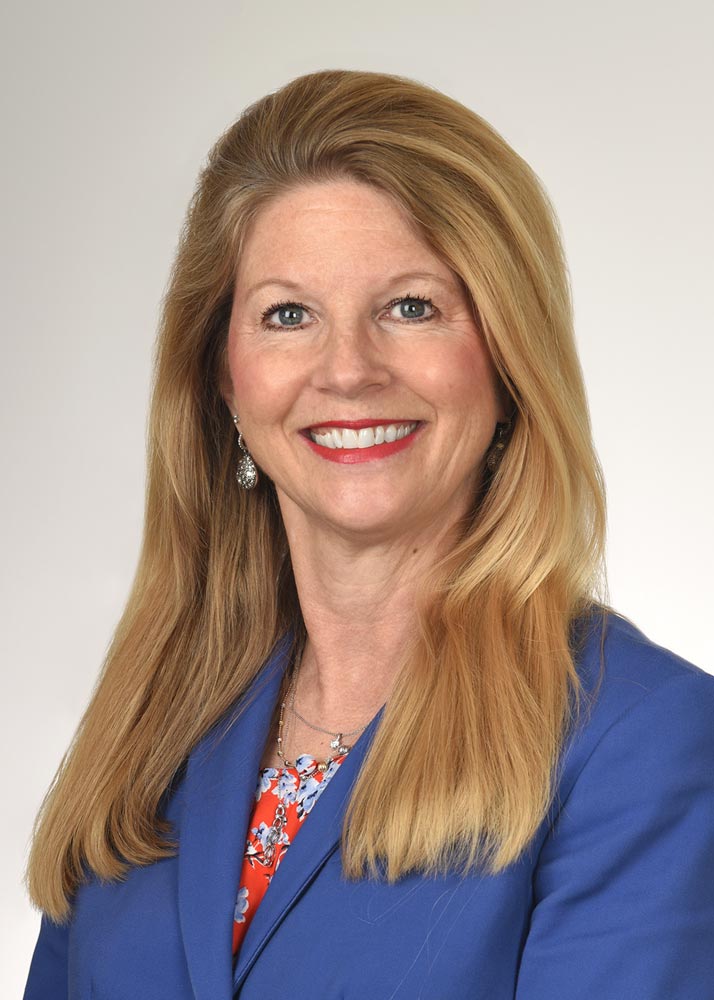
At MUSC, McMahon led a nine-month strategic planning process and is co-leading the development of a vision for an Innovation District in Charleston, South Carolina. She implemented a program to support assistant professors who are launching their research careers, established a task force on information technology, data management and research computing infrastructure, and created a structure to increase access to clinical trials by patients in rural areas across South Carolina.
McMahon has served as a permanent member for two separate NIH study sections, has chaired more than a dozen NIH panels, and has held leadership roles in several professional organizations, including serving as chair of the Government and Public Affairs Committee for the Society for Neuroscience. In this role, she has moderated congressional hearings and events on brain health, long COVID, depression and post-traumatic stress disorder.
“I am delighted to have the opportunity to welcome Lori to the UVA community this summer. She is a respected researcher and has a track record as a successful leader, both of which position her well to help us continue to elevate UVA's research enterprise,” Executive Vice President and Provost Ian Baucom said. “I am grateful to Fred Epstein for his truly excellent work as interim vice president. He is a remarkable colleague and I deeply appreciate the time, insight and dedicated leadership he devoted to it throughout this academic year. We owe him an enormous debt of gratitude.”
UVA’s “Great and Good” 2030 strategic plan calls for the University to intensify its efforts to rise in the ranks of the nation’s leading research universities. In fiscal year 2023, UVA achieved $532 million in externally sponsored research funding, surpassing the $500 million goal set five years earlier. The plan calls for the University to address pressing challenges and unlock opportunities by working across traditional boundaries.
“I have spent my entire career at public institutions and am personally committed to service,” McMahon said. “When I read the 2030 Plan, I was inspired by the vision President Ryan articulated ‘to serve the public through unending and fearless search for the truth and through our teaching, our research, and our health care.’ I am extremely honored to join the amazing UVA leadership team and to work hard to fulfill this vision to serve the public and all who are part of this great institution.”
Through the Grand Challenges program, University leaders sought input from researchers across Grounds on investments to make in five broad areas that both matched UVA’s existing strengths and could address major societal challenges: democracy; brain and neuroscience; environmental resilience and sustainability; digital technology and society; and precision medicine/health. Projects funded through the Grand Challenges are underway in each of these areas, opening doors for additional support through grants, philanthropy and investments from the commonwealth and UVA.
In January 2023, the University announced the launch of the Paul and Diane Manning Institute of Biotechnology – funded in part by a $100 million gift from the Mannings. Two years earlier, a commitment from Martha and Bruce Karsh enabled the University to create the Karsh Institute of Democracy.
UVA leaders say these institutes, along with Brain Institute, the Environmental Institute and other research initiatives focused on digital technology, youth mental health and cancer in rural regions are designed to strengthen UVA’s position as a research university that will enrich and improve lives.
Baucom also expressed his appreciation to the search committee, chaired by University Professor Catherine Bradshaw, senior associate dean for research in the School of Education and Human Development. “Deep thanks to the entire search committee for their work to find the right person to lead research at UVA as we strive to achieve our shared ambitions,” he said.
McMahon is a summa cum laude graduate of Southern Illinois University, where she studied biology and chemistry. She earned a doctorate in neuropharmacology from Saint Louis University Health Sciences Center and completed postdoctoral training in neurobiology at Duke University Medical Center. She is married to a molecular biologist, and she has three adult sons and two adult stepsons.