




Allison Elias, an assistant professor of business administration at the University of Virginia’s Darden School of Business and author of the forthcoming book “The Rise of Corporate Feminism: Women in the American Office, 1960–1990,” answers in a recent Q&A whether all women benefit from efforts to advance gender equity in the workplace.
A “Triple Hoo” who earned her bachelor’s degree in studies in women and gender, and her M.A. and Ph.D. in history, Elias comments on where we’ve been – and where we’re going.
Q. How would you describe the situation for working women in our society right now?
A. Well, it depends who you are and where you are. There certainly is more attention to increasing women’s representation at the top. Arguably there is more support (mostly from the private sector) than ever before to increase women’s representations on boards and in the C-suite, as well as in professional fields in which they have been historically underrepresented (e.g., STEM, finance).
In addition, while COVID seems to have had a disparate impact on women’s careers, it also has enhanced public attention to the difficulties women and men face as employees and caregivers. On the other hand, if you look at labor statistics in the U.S. and globally, you see some of the same troubling trends that most women of color face a larger gender wage gap than do white women at work. Furthermore, occupational segregation by gender and race is still a major component of these persistent wage gaps. Female-dominated jobs pay less, and women of color are overrepresented in these positions.
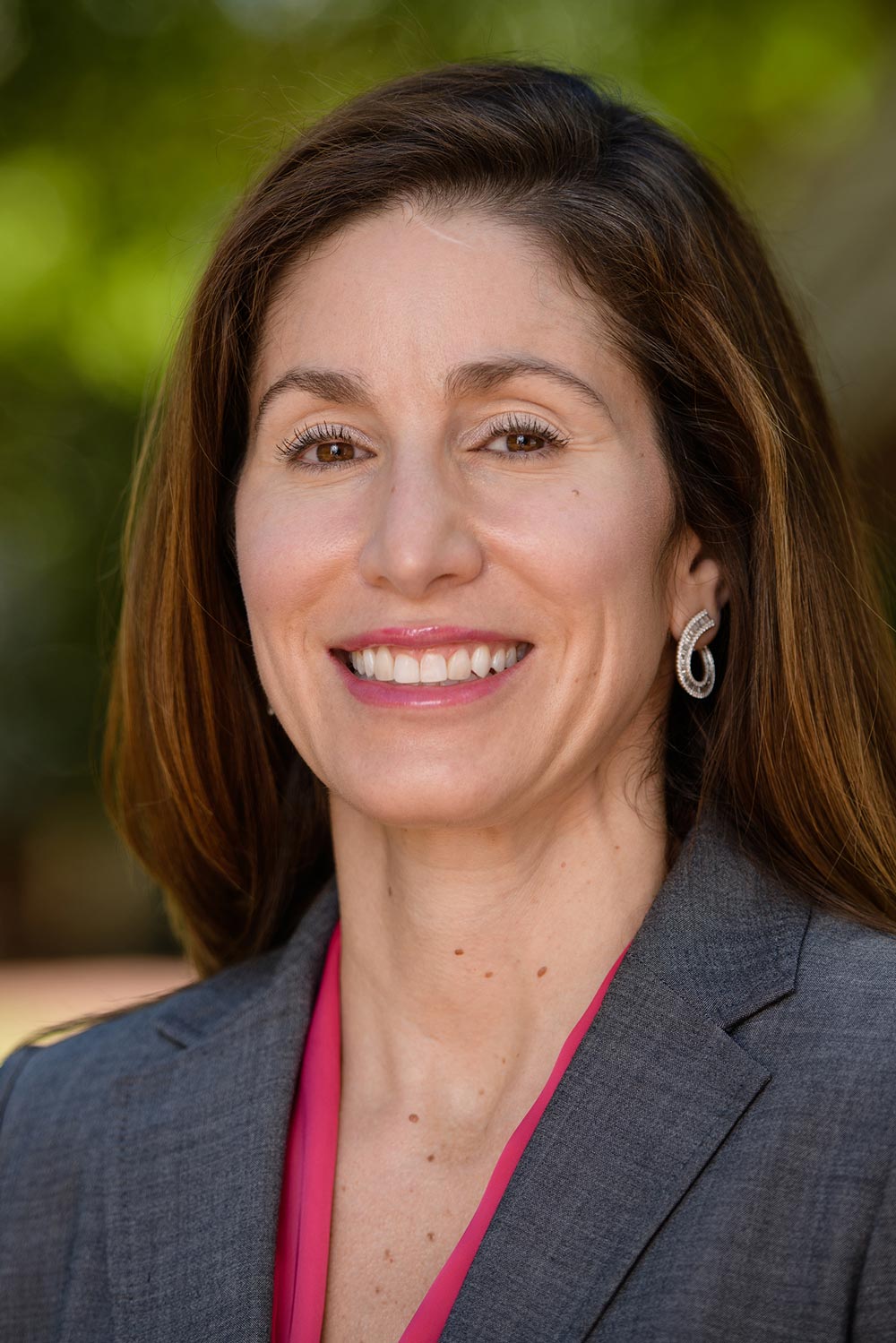
Allison Elias is a Triple Hoo whose forthcoming book looks at women at work over a three-decade span. (Contributed photo)
I’m not sure we pay enough attention to the intersections of gender, race and socioeconomic status. Career opportunities are really tied to social capital and educational resources that are not available to all women. This is something that has always fascinated me – the gender of economic inequality, so to speak.
Q. Could you explain that – “the gender of economic inequality”?
A. I think when Sheryl Sandberg’s “Lean In” came out in 2013, a lot of professional women – myself included – felt an exciting shift in the discourse around women and work. But my own field of research, which looks at the plateau in pay and opportunity for women in the lower echelons of office work – the lower-paid, white-collar jobs –wasn’t part of this conversation.
This is a group that has been left out of many of the most visible and impactful feminist victories of the 1960s and ’70s, particularly in tandem with the decline of a more traditional employment relationship. So there’s this dichotomy when we talk about women’s advancement in the workplace, because the most mainstream ideas and solutions seem to apply better to some women than to others.
Q. In “The Rise of Corporate Feminism,” you look at the subject through the lens of the secretarial profession in the U.S. between the 1960s and the 1990s. What do you find?
A. Occupational categories were constraining as a factor for advancement, especially during a time of tremendous social change whereby the job title of secretary represented an older corporate order and the professional identity of the secretary came under fire.
I find the language used to describe certain types of work (as well as terminology regarding women’s problems at work) fascinating because it marginalizes some groups while advancing others. So even the term “corporate feminism” is interesting to me since it has come to mean the advancement of more privileged women into leadership positions.
But women’s activism in corporate America was not always that narrow. When you look at the feminist movement in the ’60s, it’s not just happening in marches and on the streets, there’s plenty of debate going on in corporate contexts – in banks, the insurance companies, publishing houses and so on – with women of varying socioeconomic statuses in the ’60s and ’70s meeting at work to discuss potential solutions for a variety of problems. In the ’70s, you see a more unified agenda in these grassroots women’s caucuses in the private sector, with many women engaged who did not consider themselves “feminists.” There’s a desire to help lower-paid women gain access to training to help them get into managerial positions. There is a push to make affirmative action operate via salary, not just job title. So there is earnest work to make structural changes in this period.


