

The immense effects that habitat-forming organisms such as trees, corals and oysters have on ecosystems have long been understood, but a new study from University of Virginia ecologist Max Castorani and colleagues from across the country shows the lasting influence these species have after they die.
In the study published June 10 in Science Advances, researchers analyzed 10 ecosystems, ranging from coral reefs to subarctic forests, to examine how “foundation species,” which create an ecosystem’s physical infrastructure, influence the resilience of their ecosystems after they die.
The researchers found that the physical remains of these organisms drastically alter the demographic rates of their living counterparts, such as growth and survival, in ways that could speed up or slow down ecosystem recovery. Those effects “from a 50% reduction to a 12-fold increase.”

Postdoctoral researcher Kai Kopecky poses for a selfie while in graduate school, studying coral reefs in French Polynesia. (Contributed photo)
“Foundation species can be thought of as nature’s most important architects,” said Castorani, an associate professor of environmental sciences at UVA. “They form entire ecosystems by creating complex structure in environments that otherwise would be much simpler, and those habitats attract and support many other forms of life. Coral reefs and rainforests are familiar examples, but coastal marshes and oyster reefs function in the same way.”
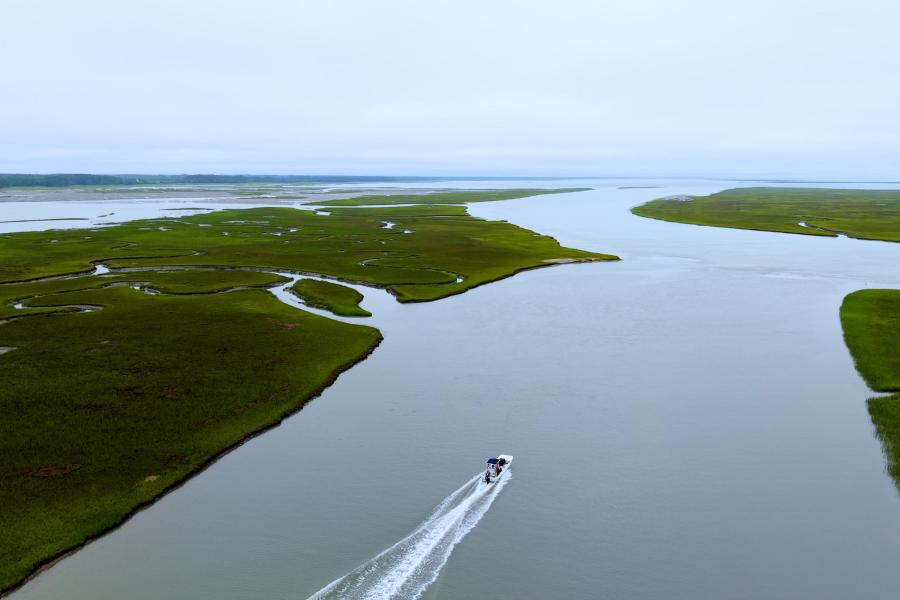
Led by Kai Kopecky, a postdoctoral researcher at the University of Colorado’s Environmental Data Science Innovation and Impact Lab in Boulder, the team analyzed datasets from the U.S. Long Term Ecological Research Network, which studies ecosystems over years and decades. One such site is the Virginia Coast Reserve Long Term Ecological Research project, which has been funded by the National Science Foundation and based at UVA since 1986.
In coastal Virginia, fallen oyster shells strengthen ecosystem recovery by creating habitat for new oysters to settle and grow. But broken coral skeletons have the opposite effect, promoting the growth of seaweeds, which overgrow the corals. Dead trees that fall over slowly decompose and release nutrients that stimulate the growth of the next generation of trees, but when dead grass litter piles up, it blocks light resources from new grasses trying to emerge from below.
The researchers say that understanding these effects is increasingly urgent as hurricanes, heat waves, wildfires and droughts grow more frequent and severe, leaving behind greater amounts of dead material.
Over 85% of the world’s oyster reefs have been lost due to overharvesting and disease, including in Virginia. Coastal restoration has been a focal point for Castorani and his colleagues at the Virginia Coast Reserve Long Term Ecological Research project, based at UVA’s Coastal Research Center in the town of Oyster.

On Virginia’s Eastern Shore, Max Castorani is part of the world’s largest seagrass restoration effort. (Photo by Lathan Goumas, University Communications)
“Ecological restorations are increasing exponentially, and this research project is helping shed light on the role of dead foundation species for ecosystem recovery, including how oyster shells promote the next generation of oysters,” Castorani said. “Most (oysters) live a few years and, when they die, those shells fall and build the reef vertically, which helps it keep pace with sea level rise.”
Castorani and colleagues at the Virginia Coast Reserve have been partnering with restoration groups, such as The Nature Conservancy, to better understand the best ways to restore oyster reefs.