

For more than a decade, the University of Virginia, Duke University and Vanderbilt University have partnered to offer courses in languages not often taught in Western academic institutions, including Cherokee, Haitian Creole and Swahili. It is run by the Institute of World Languages.
Beginning next academic year, the consortium will expand to offer courses in the Andean language Quechua. Joshua Shapero, a linguistic anthropologist and lecturing fellow at Duke, will be the instructor.
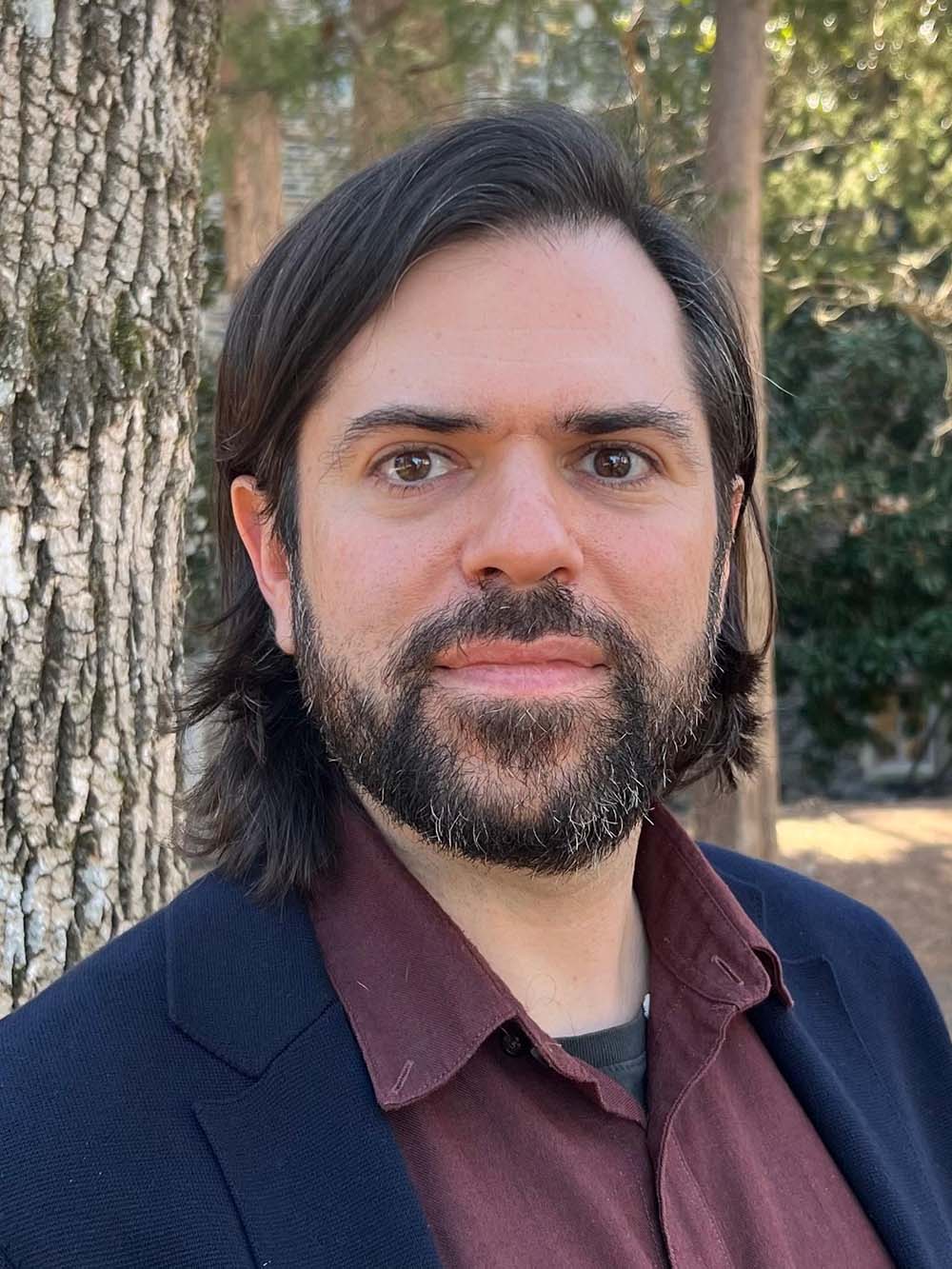
Shapero’s course, like other consortium courses, will be hybrid, with UVA and Vanderbilt students virtually joining a physical class at Duke. (Contributed photo)
Shapero spoke with UVA Today about the Quechua language and culture and why students should consider the course.
Q. What led you to study and teach Quechua?
A. Before coming to Duke, I was at the University of New Mexico in the anthropology department. My research is on Quechua, Ancash Quechua in particular, and the relationship between language and environmental practice. I’ve been interested in teaching Quechua for many years, and have had a lot of ideas about it that I’m now putting into practice.
One of my long-term goals is to put these classes into a position to benefit people who will be doing research in places where Quechua is spoken, even if not necessarily doing research on Quechua language and culture itself.
Many glaciologists (scientists who study glaciers and ice) work in the Andes on issues of climate change, for example, but infrequently know anything at all about Quechua language or culture. Having worked on environmental issues, I have seen some of these interactions unfolding and the kinds of misunderstandings that can happen, but also the amazing synergy that can happen when researches can activate the potential for a deeper dialogue across cultures and languages.
Q. How do you approach your teaching?
A. There are a couple things I think are particular about the way that I teach Quechua compared to other language classes. One is that the cultural component is a huge part of the class. It might be close to 50/50. To me, speaking a language that’s – typologically, historically, culturally – very different from one’s own requires that you learn more than just grammar, because to really understand how it works and the contexts in which it’s spoken, you really need to understand more about the history, people and geography.
Another big focus of the way I teach is to try to get students to wrap their heads around what it feels like to speak a really different language with very different concepts. We try to get a sense, for example, of the evidential categories, where you use suffixes that distinguish between firsthand knowledge and secondhand knowledge. Or, for example, not using left and right, but instead using landmarks and being oriented to the landscape around you in order to have a conversation is not something that’s very common for most English or Spanish speakers. The Quechua language also grammatically marks more aspects of social agency like benefit and purpose compared to most European languages.
Q. How does teaching connect to your own research?
A. I’m interested in how people move around in and think about the environment. There’s interesting research showing that people who live in mountainous places, regardless of the language, have certain tendencies in the way that they speak that helps them stay oriented to the landscape and builds on that knowledge. Some of the things that we do with language are cultural and nongrammatical or not necessarily linguistic. That’s a big part of the class as well, and also central to my own research on the relationship between language and environmental practice.