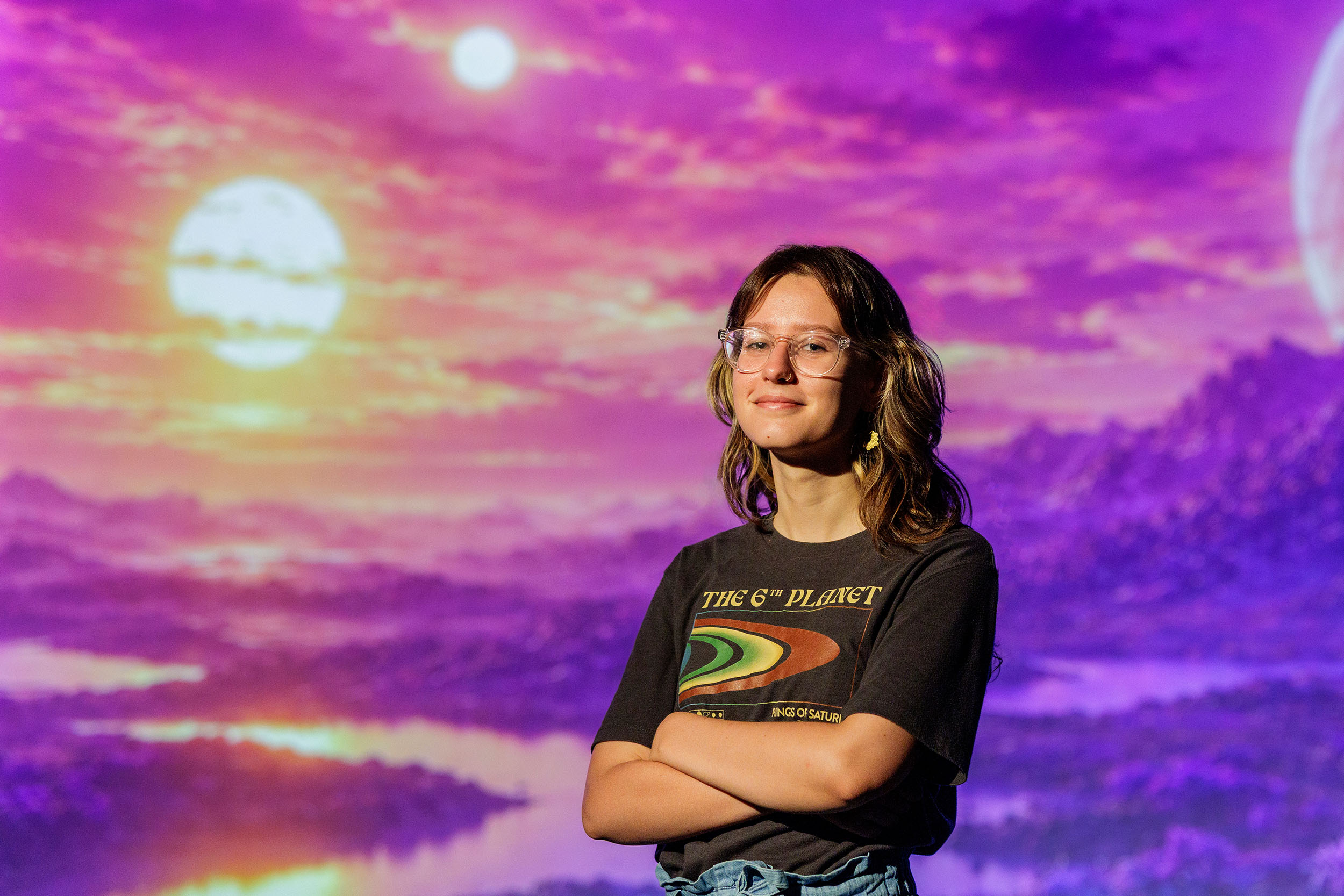




The idea of alien worlds conjures images of planets populated by the beings found in a “Star Wars” bar scene.
But the reality is much more nuanced. University of Virginia astronomer Anna Dignan takes a more scientific approach in her summer session astronomy course, Alien Worlds, which wrapped up Friday.
“By ‘alien worlds,’ we mean exoplanets, planets outside of our own solar system,” Dignan said. “This is, cosmologically speaking, a recent field of astronomy because the first exoplanet wasn’t detected until around 1992. Exoplanet astronomy is a really big field because thousands of exoplanets have been discovered.”
The planets exist in their own solar systems, some of which are similar to our own, Dignan said.
“I think the main exciting thing is that a lot of these systems could potentially hold life because they’re very similar to Earth. So, they would be the first place we would look for aliens,” she said.
While some exoplanets may be similar to Earth, they are definitely not next-door neighbors.
“The closest one is a little over four light-years away,” Dignan said. “We don’t have the technology to even travel at light speed, so it would take more than a human lifetime. Obviously, we can only see what we see from Earth, which is not necessarily what’s currently happening on that planet.”
But astronomers can still learn from planets far, far away.
“They’re important because, if we take them to be similar to Earth – assuming there’s life on that planet – how life evolved and started in the first place on these planets can tell us something about how life started on our planet, which is one of the big questions in science,” Dignan said. “What started life? Does all life need water? Does all life look the same? Or could life be based on different molecules?”


