“This could one day lead to individualized cancer treatment that is tailored to the behavioral health profile of the individual patient,” said researcher Philip I. Chow, of the University of Virginia School of Medicine’s Department of Psychiatry and Neurobehavioral Sciences and UVA’s Center for Behavioral Health and Technology.
“We know that patients are diverse in terms of their mental and physical health,” he said. “We’re trying to advance a more precise model of care that takes into account a patient’s health profile when making decisions about their cancer treatment in order to improve outcomes. It’s a bit outside-the-box thinking, and to our knowledge nobody else is doing it.”
In a new scientific paper, Chow and his collaborators, including UVA’s Dan Gioeli, a cancer biologist and co-principal investigator on the research, argue there is “strong but unrealized potential to harness mobile sensing data to improve our understanding of [patients’] cellular and biologically based diseases.”
That is possible because of recent breakthroughs in the ability to model cancer tumors, researchers say.
Data about patients’ hormones generated by wearable and mobile devices could be fed into systems to give doctors unprecedented insights into an individual patient’s disease and cancer progression, the researchers say. By using a system that models how tumor cells grow – called tumor microenvironment system, or TMES – the UVA team revealed that pancreatic cancer cells grew much faster in people with high cortisol from disrupted sleep.
But there are many other potential applications of the technology, from understanding how patients’ behaviors affect their cancers to benefiting fundamental cancer research, the researchers say.
“By bringing together different scientific disciplines, we can more effectively model cancer in the laboratory and then possibly learn how a patient’s cancer will respond to specific therapies and how helping manage a patient’s sleep or stress levels can impact that therapy,” said Gioeli, of UVA’s Department of Microbiology, Immunology and Cancer Biology. “It is incredibly exciting to be working on a team of scientists with such diverse expertise to do something unique and potentially impactful for patients.”
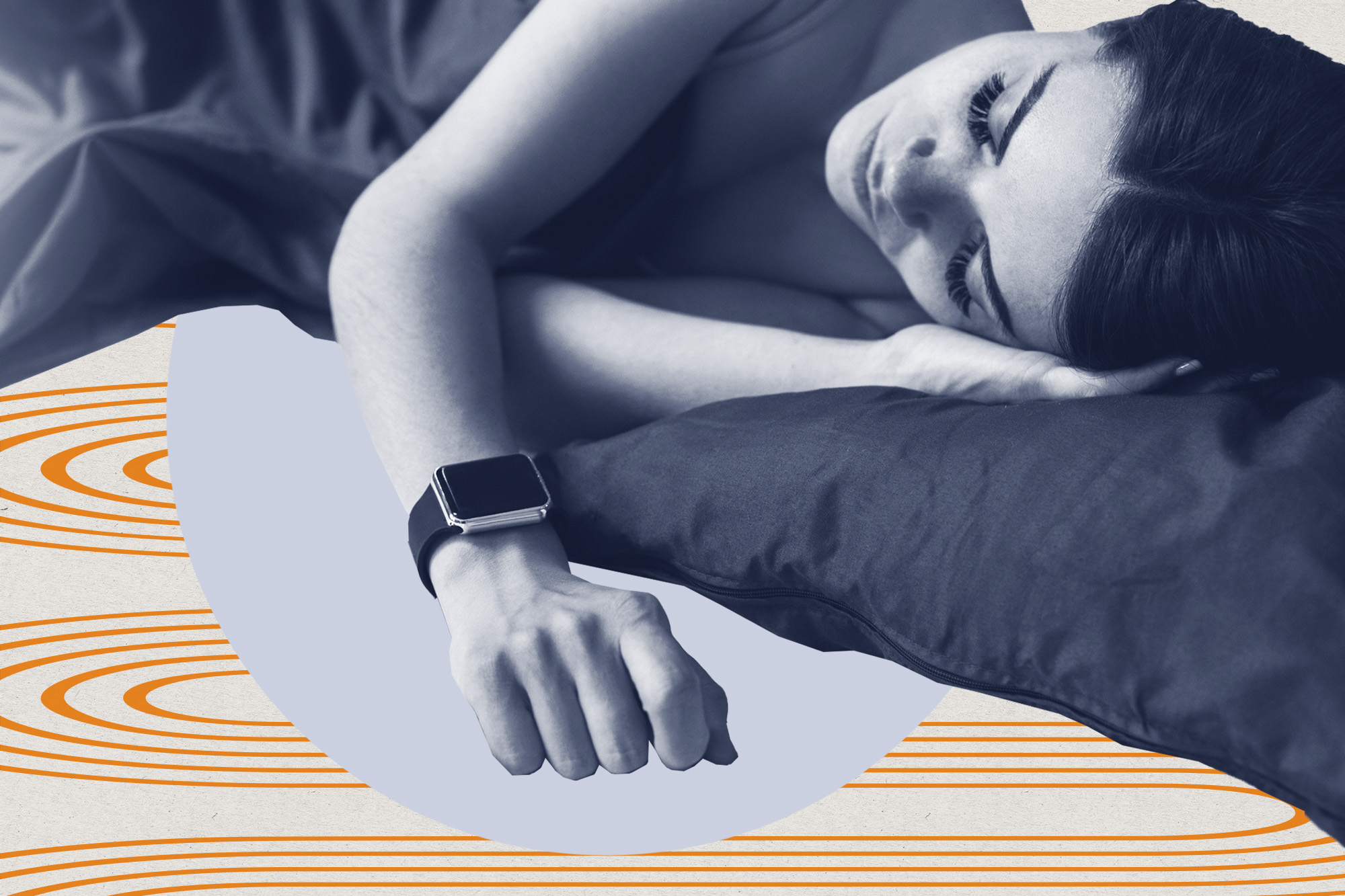
The UVA researchers envision that patients might wear a smartwatch connected to an app on their phones to securely transmit encrypted data to their health care providers. Artificial intelligence would estimate their hormone levels from their behavioral patterns, and those levels would be displayed in their electronic health records so that clinicians could leverage the information to make the best care decisions.
“Continuously monitoring patients’ underlying hormone levels has immense potential for improving their care, given how impactful they are to cellular function and body systems,” Chow said. “By combining our expertise, our aim is to advance cancer treatment that is more precise and tailored to the individual patient.”
Finding innovative ways to improve cancer care is a prime mission for UVA Cancer Center, one of only 54 cancer centers in the country awarded the prestigious “Comprehensive Cancer Center” designation by the National Cancer Institute. The designation recognizes elite cancer centers with the most outstanding cancer programs in the nation. Comprehensive Cancer Centers must meet rigorous standards for innovative research and leading-edge clinical trials.
The researchers have described their plan in the scientific journal Internet Interventions. The research team consisted of Chow, Devin G. Roller, Mehdi Boukhechba, Kelly M. Shaffer, Lee M. Ritterband, Matthew J. Reilley, Tri M. Le, Paul R. Kunk, Todd W. Bauer and Gioeli.
Gioeli has equity in HemoShear Therapeutics, which holds the license for commercial use of the TMES.
The research was supported by National Cancer Institute Cancer Center Support Grant 5P30CA044579-27.
To keep up with the latest medical research news from UVA, subscribe to the Making of Medicine blog.